 LUPER
LUPER
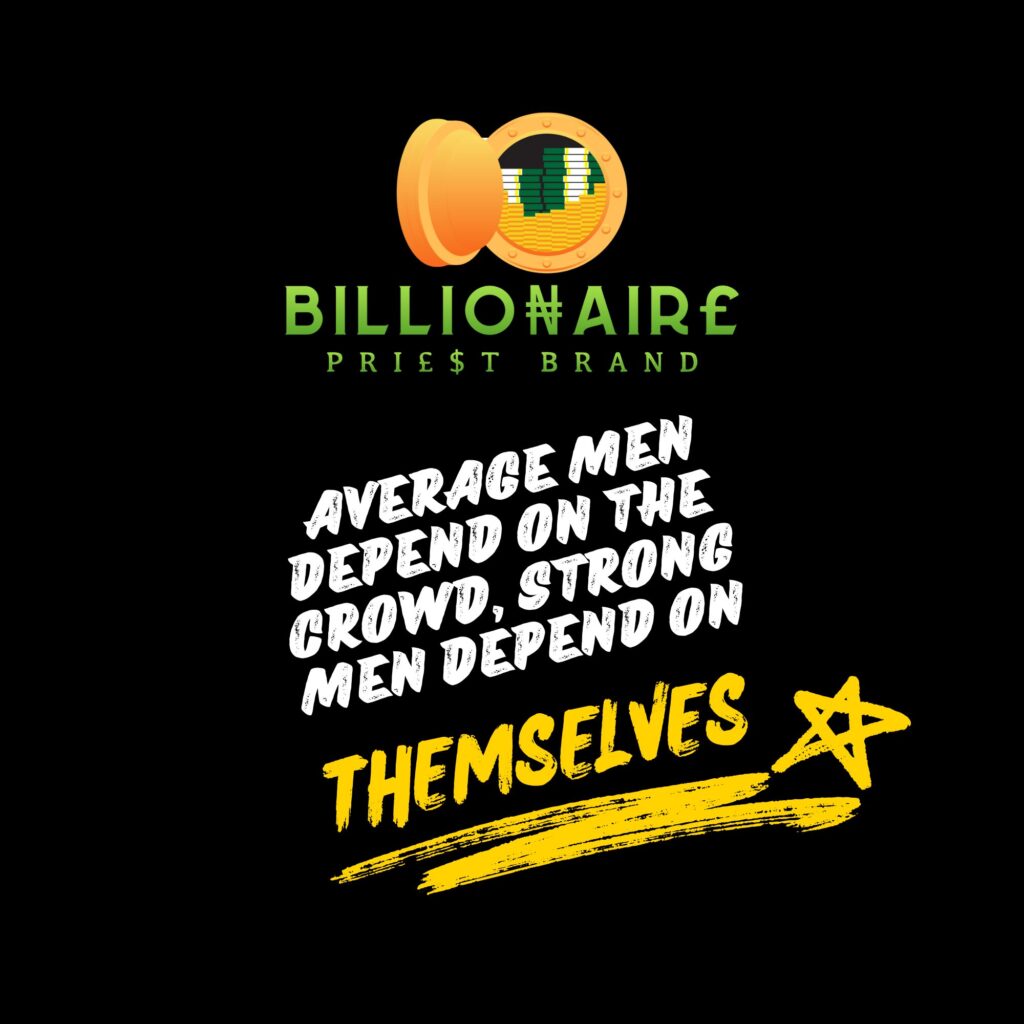
The statement “Average men depend on the crowd, strong men depend on themselves” encapsulates a profound differentiation in mindset, behavior, and approach to life challenges. This distinction can be understood through various lenses, including psychological development, social dynamics, and personal responsibility. Let’s explore this statement deeply.
Understanding the Dependency on the Crowd
- Social Validation:
- Average men, in this context, might seek validation from the crowd or larger society. This need for external approval can stem from a desire to fit in, conform to social norms, or seek affirmation from peers. It’s rooted in the psychological makeup of individuals who find comfort and identity in group acceptance.
- Fear of Rejection:
- Reliance on the crowd often accompanies a fear of rejection or social isolation. Average men may prioritize collective beliefs and behaviors over personal convictions to avoid standing out. This fear can inhibit their ability to think critically or independently, which might lead to conformity—even when it may not align with their values or ideals.
- Lack of Confidence:
- Those who depend on the crowd may exhibit lower self-confidence and self-efficacy. They might feel uncertain in their own abilities or judgments, looking to the collective for guidance and support, which can stifle their personal growth and decision-making capabilities.
- Echo Chambers and Groupthink:
- Social dependency can lead to echo chambers, where mainstream ideas are amplified while dissenting opinions are suppressed. This phenomenon, often seen in social media environments, can lead to groupthink, where critical evaluation is bypassed for the sake of harmony and conformity. Individuals may adopt beliefs without fully analyzing their validity, leading to mediocrity in thought and action.
The Strength of Self-Reliance
- Intrinsic Motivation:
- Strong men, in contrast, rely on themselves for motivation and direction. They possess a clear sense of self and a strong internal compass that guides their decisions and actions. This self-reliance fosters resilience and adaptability, enabling them to navigate challenges with confidence.
- Personal Accountability:
- Strong individuals typically embrace personal responsibility for their choices. Rather than blaming external circumstances or the opinions of others, they recognize that their life outcomes are largely a result of their actions and decisions. This mindset leads to empowerment, as they perceive themselves as architects of their own destiny.
- Critical Thinking and Independence:
- Relying on oneself encourages critical thinking. Strong individuals tend to evaluate situations based on their values, analysis, and experiences rather than by adopting collective opinions uncritically. This independent mindset fosters innovation, creativity, and the ability to make decisions that are aligned with personal beliefs and goals.
- Facing Adversity:
- Strong men are generally more equipped to face adversity. Their reliance on their own capabilities means they are more likely to confront challenges head-on rather than seeking the comfort of the crowd. This resilience enables them to learn from failure and adapt, creating a cycle of continual growth and self-improvement.
The Psychological and Philosophical Roots
- Existentialism and Authenticity:
- Philosophically, the concept aligns somewhat with existentialist thought, which emphasizes the importance of individual authenticity and self-determination. Strong individuals often seek to express their true selves rather than conforming to societal expectations, thereby achieving authenticity in their lives.
- Human Development:
- Psychological theories, particularly those related to personal development, suggest that self-reliance is a sign of maturity. As individuals progress, they often move from dependence on external cues (like peer influences) to greater self-reliance, characterized by developed values, beliefs, and a clear sense of identity.
Impact on Relationships and Leadership
- Influence on Others:
- Strong individuals often serve as role models or leaders, inspiring others through their actions and convictions. Their self-reliance and confidence can build trust and encourage those around them to explore their strengths, fostering environments where personal growth is valued.
- Relationship Dynamics:
- While average men may rely on the crowd for affirmation, strong men can foster deep relationships based on mutual respect, understanding, and support rather than dependence. This leads to healthier interpersonal dynamics where individuals empower each other rather than seeking validation through adherence to group norms.
Conclusion
In summary, the distinction between average men who depend on the crowd and strong men who rely on themselves underscores fundamental differences in mindset, behavior, and personal growth. It reflects a spectrum of social dependence versus personal autonomy, with significant implications for how individuals navigate their lives, relationships, and challenges. Embracing self-reliance encourages personal responsibility, critical thinking, and resilience, promoting a path to meaningful achievement and authentic living. In contrast, excessive dependence on social validation can limit personal potential and perpetuate cycles of mediocrity. Understanding and striving for self-reliance can lead individuals toward a more fulfilling and empowered existence.