 LUPER
LUPER
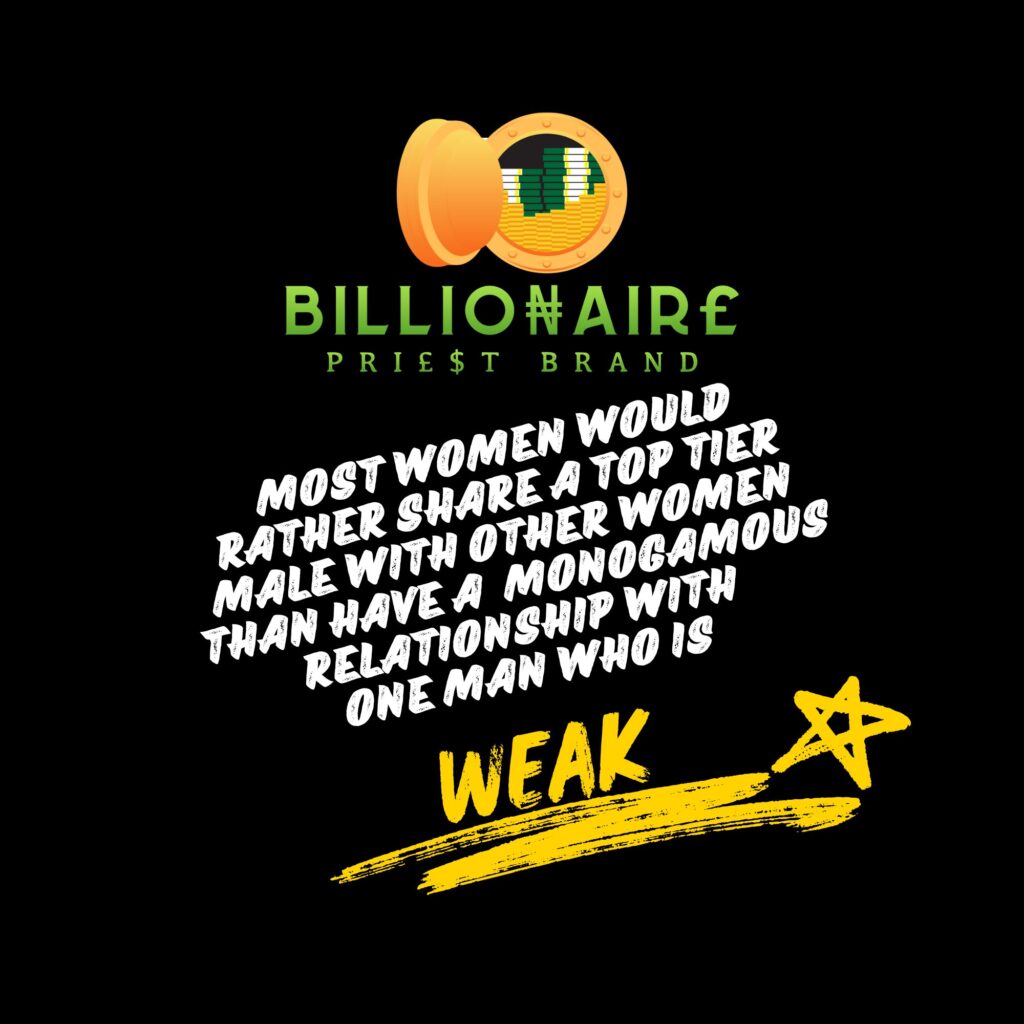
That claim sounds neat and provocative, but it collapses a very complex set of human preferences into a single rule—and that’s where it goes wrong.
There is a kernel of reality underneath it, but it’s been stretched far beyond what evidence or real-world behavior supports.
1. What’s the “grain of truth”?
Across cultures, many women tend to value traits like:
- Competence
- Confidence
- Status or capability
- Emotional stability
From an evolutionary psychology lens—often associated with thinkers like David Buss—these traits historically signaled:
- Resource security
- Protection
- Better outcomes for offspring
So yes, all else equal, a highly capable, confident man will often be more attractive than someone perceived as passive, unreliable, or “weak.”
2. Where the claim breaks
The statement assumes a binary that doesn’t exist in reality:
“Top-tier but shared” vs. “monogamous but weak”
In real life, most people are choosing among many dimensions at once, including:
- Emotional safety
- Loyalty and trust
- Availability
- Shared values
- Stability
- Attraction
A “top-tier” man who is:
- Unavailable
- Non-committal
- Dividing attention across multiple partners
often fails on several of those dimensions. For many women, that’s a dealbreaker—not a trade-up.
3. What research and behavior actually show
In practice, most women strongly prefer:
- Committed, exclusive relationships
- With someone they respect and feel secure with
Even in studies of attraction:
- Short-term attraction may skew toward high-status or highly dominant individuals
- Long-term partner choice heavily favors reliability, kindness, and commitment
This distinction—short-term vs. long-term strategy—is crucial. The original claim mixes them together as if they’re the same.
4. The misuse of “weak”
The word “weak” is doing a lot of hidden work in that statement.
If “weak” means:
- Passive
- Indecisive
- Lacking self-respect
- Avoidant of responsibility
then yes—those traits tend to be unattractive.
But that’s very different from:
- Being kind
- Being cooperative
- Not being dominant or aggressive
Many stable, attractive long-term partners are not “alpha” in a stereotypical sense—they’re dependable, emotionally grounded, and self-assured without needing to dominate.
5. Why the idea spreads
This kind of claim becomes popular because:
- It simplifies dating into a competitive hierarchy
- It explains rejection in a clean, external way
- It borrows selectively from evolutionary ideas and exaggerates them
There’s also a visibility bias:
- Highly attractive, high-status men with multiple partners are more noticeable
- Quiet, stable monogamous relationships are less visible but far more common
So the extreme cases feel representative when they’re not.
6. What actually predicts relationship choice
Long-term partner selection tends to converge on a combination of:
- Attraction (yes, this matters)
- Respect (often linked to competence and self-direction)
- Emotional safety
- Trust and exclusivity
- Shared life goals
A man who is “top-tier” in looks/status but lacks reliability often loses out to someone who is solid across these dimensions.
7. A more accurate version of the idea
If you strip away the exaggeration, you get something like:
Most women are attracted to strength in the sense of competence and self-respect—but for long-term relationships, they strongly prefer that combined with exclusivity and emotional reliability.
That’s very different from preferring to “share” someone.
Bottom line
The claim mixes:
- A real preference for competence and confidence
- With an exaggerated idea that women prioritize status over commitment
In reality, most women are not choosing between “sharing a top-tier man” and “settling for weakness.” They’re looking for someone who is both capable and committed—and that combination tends to win over either extreme.