 LUPER
LUPER
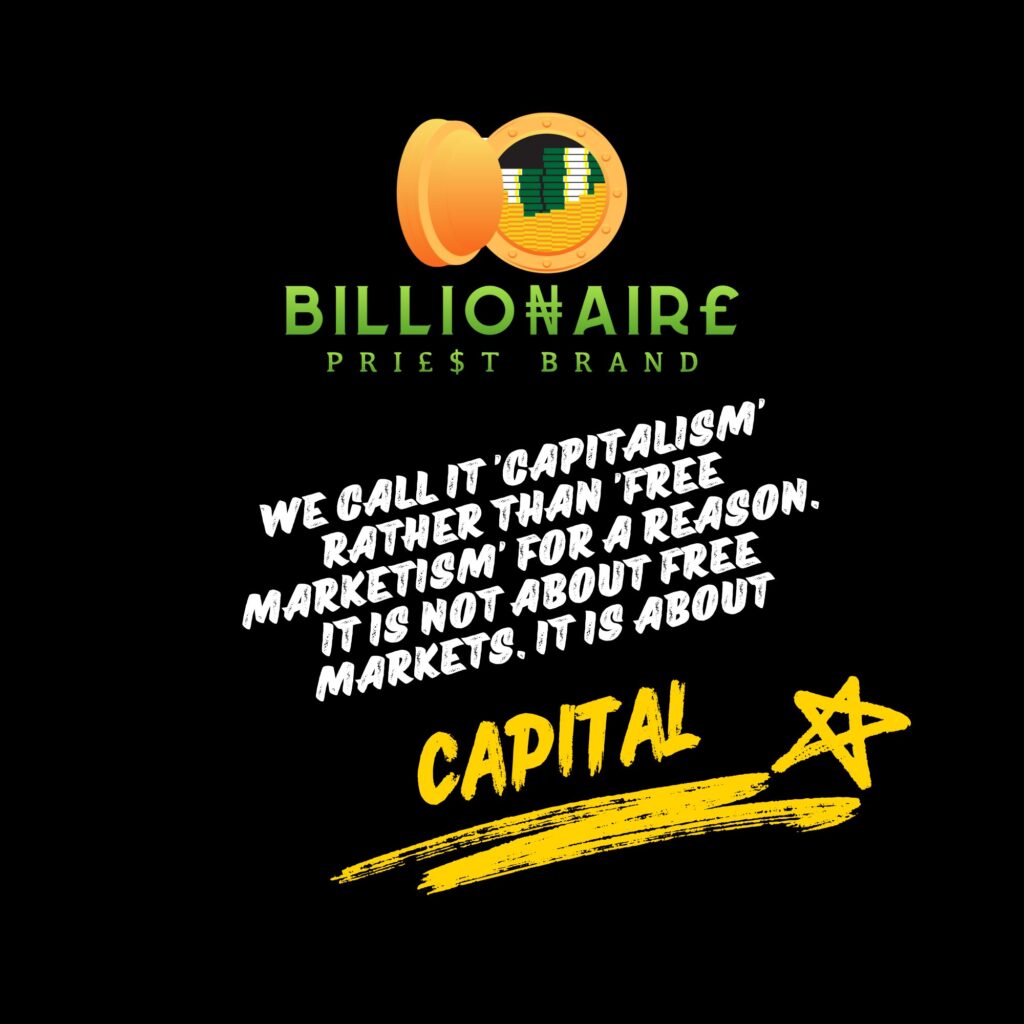
The terms “Capitalism” and “Free Marketism” are often used interchangeably, but they signify different concepts and underlying principles. Understanding the distinction is crucial for grasping the economic, social, and ethical intricacies of modern economies. Here’s a deep exploration of why capitalism is more about capital and the implications of this focus.
1. Definitions and Core Concepts
- Capitalism: At its core, capitalism is an economic system characterized by private ownership of the means of production and the creation of goods or services for profit. The primary driver of capitalism is capital, which includes financial assets, resources, and investments. Capital flows and accumulation are central to the functioning of this system.
- Free Marketism: In contrast, free marketism refers to an economic paradigm that emphasizes unregulated markets, voluntary exchanges, and minimal state intervention. While free markets are a significant aspect of capitalism, they do not fully encompass the complexities and structures that frame capitalism as a system.
2. The Role of Capital
- Definition of Capital: Capital involves tangible and intangible assets that can create wealth. This includes financial capital (money and investments), physical capital (machinery, factories), and human capital (skills and labor). In capitalism, the accumulation and reinvestment of capital are crucial for growth and sustainability.
- Wealth and Power: Capital provides individuals and businesses with the ability to generate more wealth and, consequently, more power. Those who control significant capital often have substantial influence over economic policies, social norms, and even political structures. This concentration of capital can lead to power imbalances in society.
3. Market Dynamics and Structure
- Capital Accumulation: Capitalism inherently focuses on the accumulation of capital. Companies seek profits, which they reinvest to grow further, leading to cycles of investment and expansion. This focus on profit maximization can sometimes come at the expense of social welfare, labor rights, and environmental considerations.
- Market Failures and Inequality: The pursuit of capital can lead to market failures, where some individuals and businesses accumulate wealth while others are left behind. Inequalities can become systemic, resulting in economic disparities and contributing to social unrest. In many instances, the so-called free market does not operate as a level playing field, but rather as a battleground shaped by power dynamics, monopolies, and regulatory frameworks favoring the wealthy.
4. Intervention and Regulation
- The Role of the State: While free marketism advocates for minimal government intervention, capitalism often necessitates some level of government involvement. This intervention can manifest in various forms, including regulations to curb monopolistic practices, labor laws to protect workers, and social safety nets to assist disadvantaged groups. The state’s role becomes crucial in balancing the interests of capital accumulation with broader societal needs.
- Regulatory Frameworks: In a capitalist system, the state creates the legal frameworks that govern property rights, contracts, and business operations. These frameworks are essential for maintaining market order, protecting investors, and ensuring fair competition. They illustrate the complex interaction between capital and the market beyond mere free exchanges.
5. Innovation, Competition, and Failure
- Innovation Driven by Capital: Capitalism incentivizes innovation through the potential for profit. Companies invest in research and development to create new products and services, which can drive economic growth and improve living standards. However, this innovation is often accessed and driven by those with sufficient capital to invest.
- Creative Destruction: The process of “creative destruction,” popularized by economist Joseph Schumpeter, describes how capitalism evolves. Established businesses may collapse as new ones emerge, driven primarily by capital accumulation. While this dynamism can benefit society as a whole by leading to new products and efficiencies, it can also result in significant social upheaval for those displaced.
6. Ethical Considerations and Social Responsibility
- Profit vs. Purpose: The emphasis on capital in capitalism raises ethical questions about the purpose of business. Companies often face pressure to prioritize shareholder value, sometimes over social responsibility and ethical considerations. This focus can lead to practices that harm communities and the environment.
- Corporate Social Responsibility (CSR): In response to these ethical dilemmas, many businesses are adopting frameworks of CSR, recognizing that long-term success is not solely about profit but also about the well-being of stakeholders, including employees, customers, and the environment. This shift reflects an evolving understanding of capital, where social capital and goodwill are seen as essential to sustainable business practices.
7. Conclusion
In summary, while “free marketism” emphasizes unregulated markets and voluntary transactions, “capitalism” is fundamentally rooted in the dynamics of capital accumulation, ownership, and investment. Capitalism encapsulates a broader framework that includes both the principles of market exchanges and the intricate relationships between economic power, inequality, governance, and societal well-being.
The focus on capital in capitalism necessitates a careful consideration of how wealth is created, distributed, and regulated, emphasizing the need for a balanced approach