 LUPER
LUPER
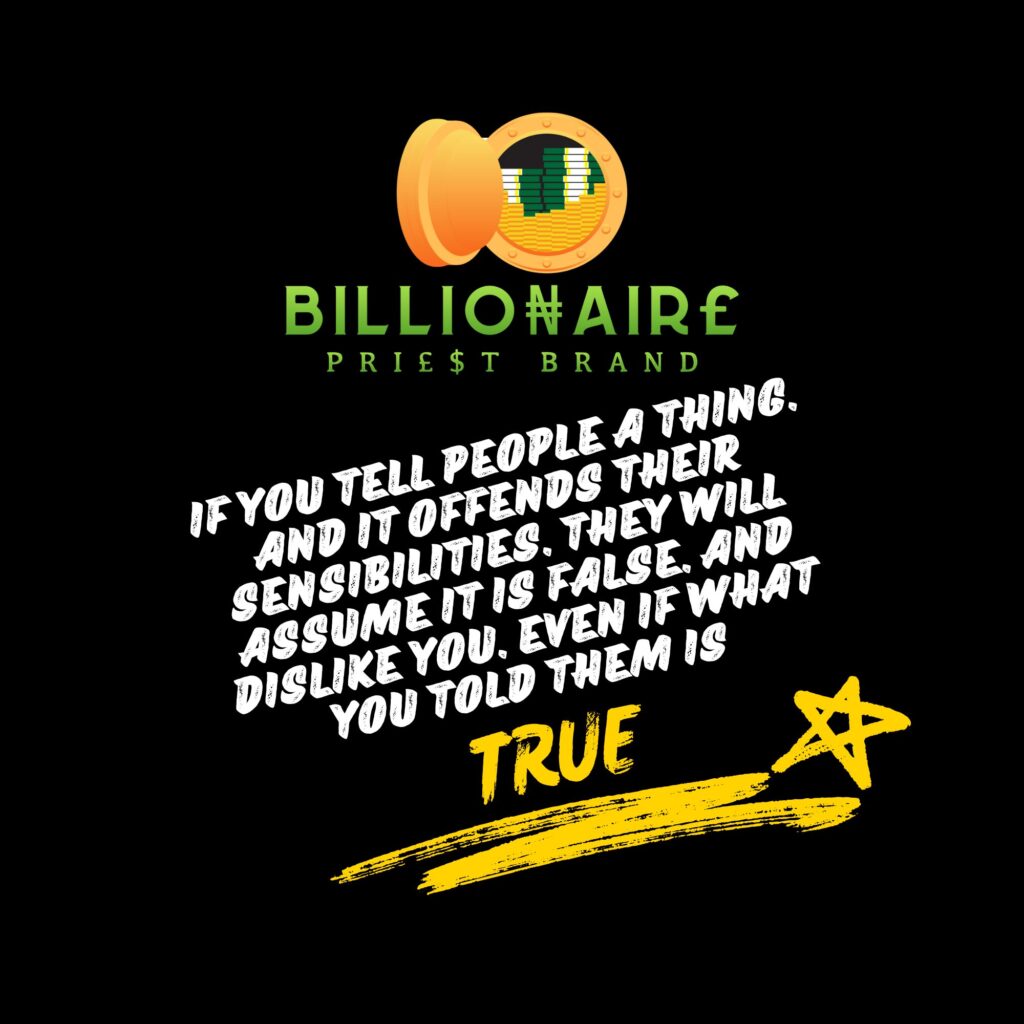
Even If What You Told Them Is True.
There’s a real psychological pattern behind what this statement is describing—but it’s not absolute, and the “why” matters more than the slogan.
Why people reject true but offensive information
1) Beliefs are tied to identity, not just facts
Humans don’t hold beliefs like neutral data; they’re often connected to identity, group belonging, and self-image. When a claim threatens that, it triggers defensiveness, not curiosity.
This is closely related to Cognitive dissonance:
- If a statement clashes with what someone believes about themselves or their world, it creates psychological discomfort
- One way to reduce that discomfort is to reject the new information rather than revise the old belief
So even if something is true, accepting it can feel like a loss—of identity, certainty, or status.
2) We evaluate who says it as much as what is said
Trust isn’t purely about truth—it’s about the source.
If someone feels:
- Judged
- Disrespected
- Or socially threatened
They’re more likely to dismiss both the message and the messenger.
This ties into the Affect heuristic:
- Emotions (like offense or irritation) shape judgments of truth
- If something feels bad, people are more likely to rate it as false or untrustworthy
So “offense” doesn’t just hurt feelings—it biases perception of reality.
3) People protect their worldview coherence
Humans prefer a stable, predictable worldview. Information that disrupts it—especially abruptly—gets filtered out.
This is part of Motivated reasoning:
- We don’t just reason to find truth
- We often reason to protect what we already believe
If a statement implies:
- “You’re wrong”
- “Your group is wrong”
- “Your values are flawed”
…it’s likely to be resisted regardless of accuracy.
4) Social consequences matter
Beliefs aren’t just personal—they’re social.
Agreeing with a controversial or offensive truth can:
- Risk social exclusion
- Signal disloyalty to a group
- Create conflict
So rejecting the claim can be a socially safer move, even if privately someone is unsure.
5) Delivery affects acceptance more than people expect
The same idea can be accepted or rejected depending on how it’s said.
If the delivery:
- Sounds contemptuous
- Lacks nuance
- Feels like an attack
…it increases resistance. People aren’t just reacting to truth—they’re reacting to perceived intent.
Why people may also dislike the person
When a statement offends, listeners often infer motives:
- “They’re trying to provoke”
- “They think they’re superior”
- “They don’t respect people like me”
Whether that’s true or not, it affects how the speaker is judged.
This is related to the Fundamental attribution error:
- People attribute others’ behavior to character (“they’re arrogant”) rather than context (“they communicated poorly”)
So disagreement becomes personal, not just intellectual.
Where your statement is too strong
It’s not true that:
People will assume offensive things are false
More accurate:
- People are more likely to reject or scrutinize ideas that threaten them
- But they don’t always reject them—especially if:
- The source is trusted
- The framing is careful
- The listener is open or reflective
Also, sometimes what’s labeled “offensive truth” is:
- Partially true
- Poorly framed
- Missing context
So rejection isn’t always irrational.
A sharper version of this idea
A more precise formulation would be:
“When a claim threatens people’s identity or values, emotional and social pressures can make them more likely to reject it and view the speaker negatively—even if the claim has truth to it.”
The practical takeaway
If your goal is to be understood (not just correct), then:
- Truth alone isn’t enough
- Framing, timing, and trust determine whether truth is accepted
Blunt accuracy often loses to psychologically acceptable delivery.