 LUPER
LUPER
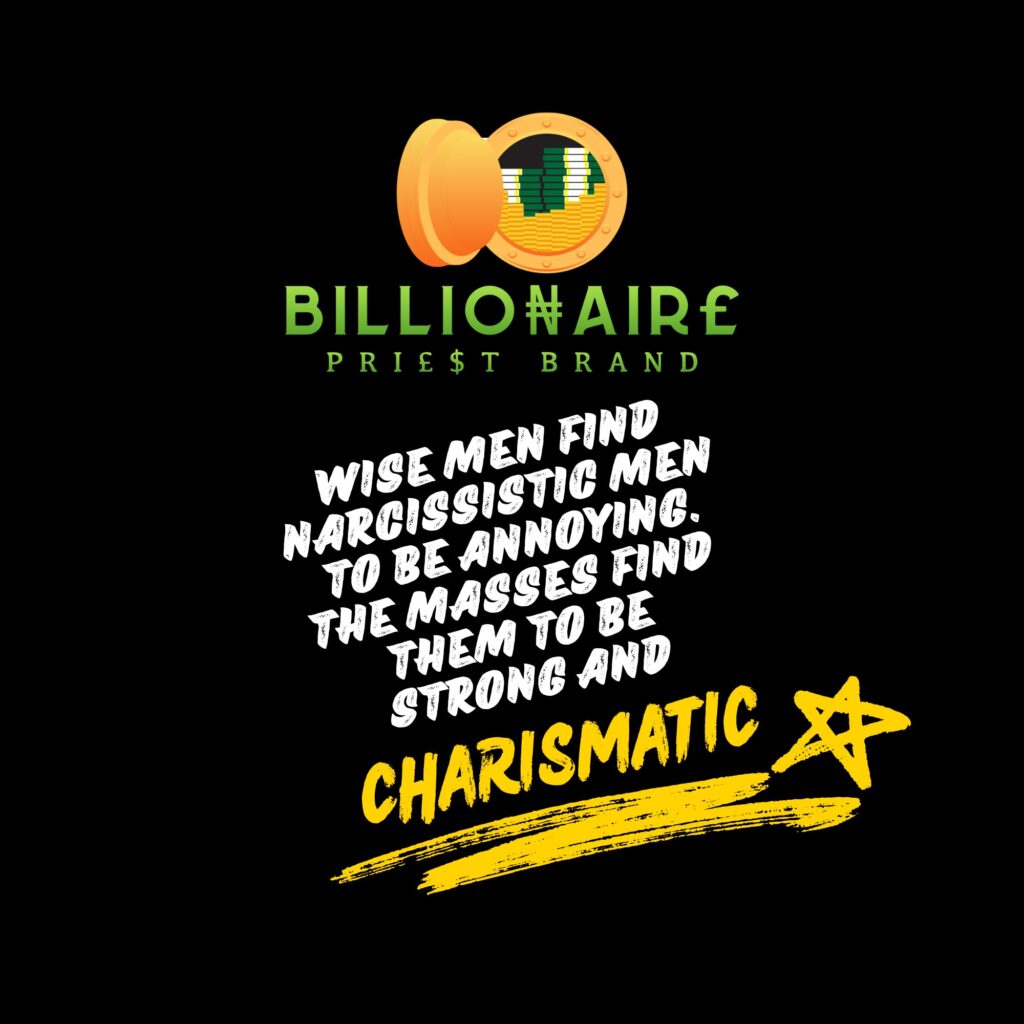
There’s something real behind that observation, but it’s not that “wise people” have a special dislike switch—it’s more about what different groups are paying attention to.
At the surface level, narcissistic traits (confidence, dominance, certainty, self-promotion) map very closely to what humans instinctively read as “leadership signals.” In large groups, people often don’t have the time, information, or incentive to evaluate someone deeply, so they rely on fast heuristics:
- Who speaks with certainty?
- Who seems unshaken?
- Who takes up space?
- Who tells a clear, simple story?
Narcissistic individuals are often excellent at broadcasting those signals. They project clarity even when they lack it, and confidence even when it’s unwarranted. That’s why, at scale, they can come across as charismatic or strong—especially in uncertain environments where people crave direction.
Now contrast that with what more perceptive or experienced individuals tend to notice.
People with sharper judgment (whether from experience, reflection, or expertise) are less focused on the signal and more on the substance. Over time, patterns become obvious:
- Confidence without competence
- Charm that doesn’t hold up under scrutiny
- A tendency to dominate conversations rather than build understanding
- Fragility behind the ego (e.g., defensiveness, inability to handle criticism)
- Relationships that feel transactional rather than genuine
Once you see those patterns, the same behaviors that looked like “charisma” start to feel repetitive, shallow, or even exhausting. That’s where the “annoying” perception comes from—not moral superiority, but pattern recognition.
There’s also a cognitive bias at play known as the Dunning–Kruger effect. People with lower expertise in a domain may overestimate confidence as competence, while more knowledgeable individuals can better distinguish the two. So the gap in perception isn’t random—it’s tied to how well someone can evaluate what they’re seeing.
Another layer is emotional economy. Narcissistic personalities often:
- Demand attention
- Redirect conversations toward themselves
- Struggle with mutuality
For someone who values depth, reciprocity, and accuracy, that becomes draining quickly. For someone seeking direction, excitement, or validation, it can feel energizing—at least initially.
Finally, context matters. In environments that reward speed, visibility, and boldness (politics, entertainment, certain business cultures), narcissistic traits can be advantageous in the short term. In environments that reward cooperation, long-term trust, and precision, those same traits tend to backfire.
So it’s less about “wise vs. masses” as fixed categories, and more about:
- What signals people rely on (confidence vs. evidence)
- How much time they’ve had to observe patterns
- What they personally value (certainty vs. accuracy, dominance vs. reciprocity)