 LUPER
LUPER
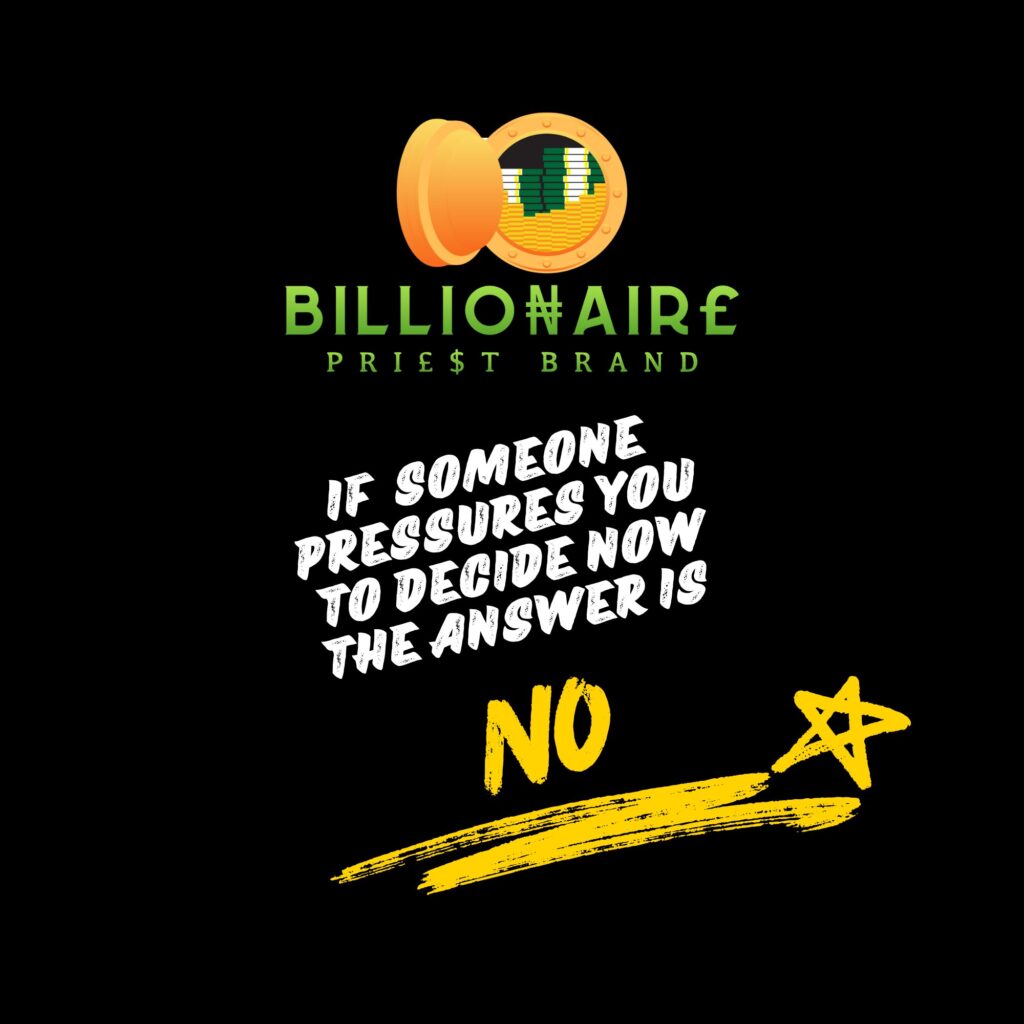
“If someone pressures you to decide now, the answer is no” is a boundary rule. It means urgency is often used to bypass your judgment.
A deep explanation:
When a person, company, or situation insists that you must decide immediately, they are shrinking the space you need to think. Good decisions usually need a little room: time to notice your feelings, check facts, compare options, and ask yourself whether this truly works for you. Pressure interrupts that process. It pushes you out of reflection and into reaction.
That matters because people make worse choices under pressure. In that state, you are more likely to confuse panic with clarity. You may say yes not because you genuinely want to, but because you want the discomfort to stop. That is not real consent, not real enthusiasm, and not real alignment. It is relief-seeking.
The rule is powerful because it flips the burden. Instead of scrambling to satisfy someone else’s urgency, you treat urgency itself as information. You ask: Why does this need to happen right now? Sometimes there is a legitimate reason. But often, artificial urgency is a tactic. Salespeople use it. Manipulative partners use it. Employers use it. Even friends and family can use it without realizing it. The message is: “Don’t consult yourself. Just comply.” The “no” protects your ability to consult yourself.
It also protects you from a subtle psychological trap: when you are rushed, you tend to prioritize the other person’s emotions over your own long-term wellbeing. You start managing their disappointment, their impatience, their expectations. Meanwhile, you abandon your own uncertainty, which may be the most important signal in the room. A pressured yes can cost you money, time, safety, energy, freedom, and self-respect long after the moment passes.
There’s also a dignity piece here. People who respect you usually respect your pace. They may have preferences, deadlines, or needs, but they do not try to override your agency. A healthy person might say, “Take some time and let me know by tomorrow.” A manipulative person says, “If you cared, you’d answer now.” The difference is huge. One invites choice. The other corners it.
This principle is not saying every quick decision is bad. Some decisions are naturally time-sensitive. Sometimes you already know enough. Sometimes your answer really is yes. The deeper point is this: if pressure is the main force creating the yes, then the yes is contaminated. A decision made under coercive urgency is not trustworthy.
So “the answer is no” is less about permanent refusal and more about refusing the conditions. It means:
- No, not under pressure.
- No, not without thinking.
- No, not just because you want me uncomfortable enough to surrender.
- No, not until I can hear myself clearly.
In practice, this rule helps because it is simple. Under pressure, you often cannot produce a perfect explanation. You may not have language for your discomfort yet. You may only know that something feels off. A default no gives you protection before you have full analysis. It buys time for your wisdom to catch up.
A strong way to phrase it is:
- “If I have to decide right now, my answer is no.”
- “I don’t make pressured decisions.”
- “If this opportunity disappears because I need time to think, then it wasn’t right for me.”
- “A real yes can survive a pause.”
That last line is the heart of it: a good opportunity, a healthy relationship, a fair offer, and an honest request can withstand consideration. If it collapses the moment you ask for time, then the pressure was part of the deal all along.
This idea is really about self-trust. It says your nervous system is allowed to matter. Your hesitation is allowed to matter. Your need for time is not a flaw; it is part of wise decision-making. And sometimes the most mature answer is not a rushed yes or even a dramatic no. It is a calm refusal to be hurried.
A concise version:
Pressure creates compliance, not clarity.
So when urgency is being used to take away your ability to think, “no” is how you protect your freedom to choose.