 LUPER
LUPER
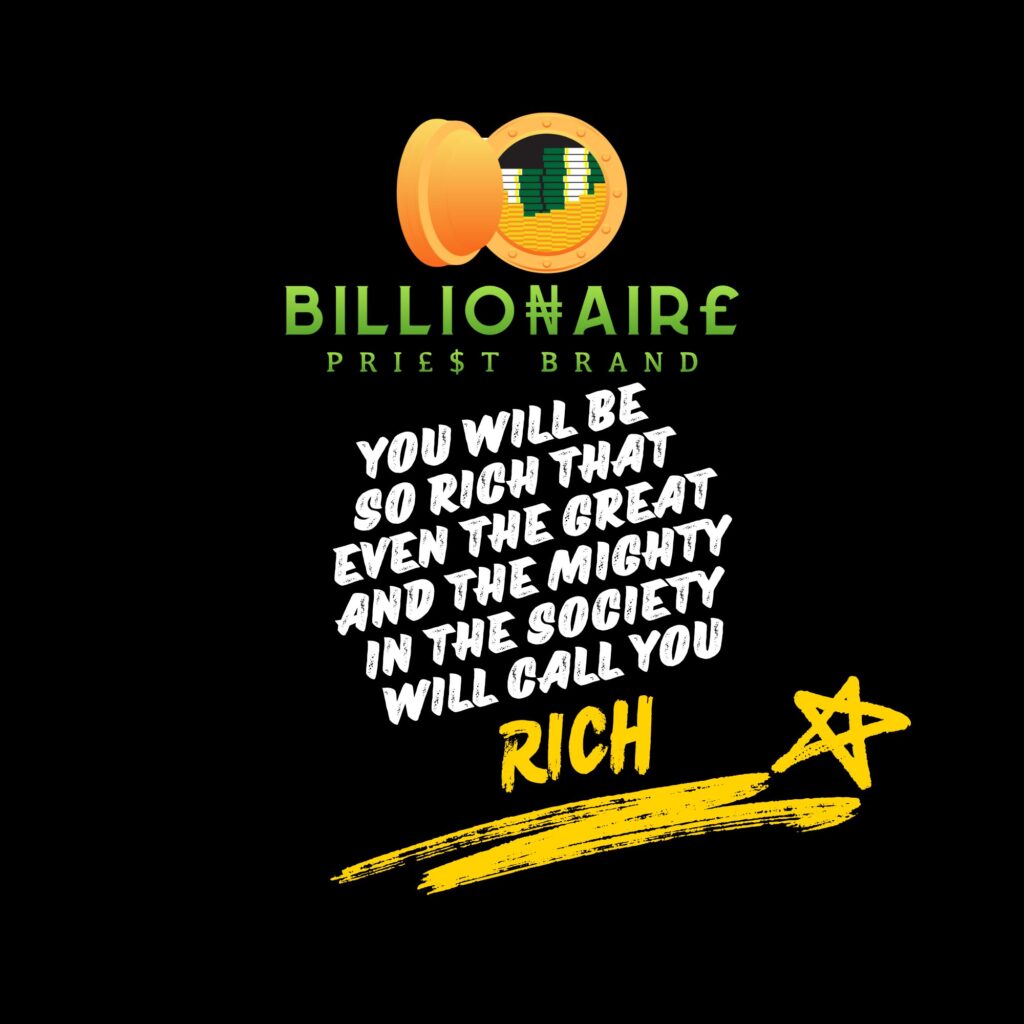
The statement “You will be so rich that even the great and the mighty in society will call you rich” conveys an idea of wealth that transcends typical measures of affluence. To unpack this concept deeply, we can explore several dimensions: economic wealth, social status, perception of richness among peers, and the implications of this wealth.
Economic Wealth
- Threshold of Richness: To be considered “rich” by societal standards usually involves possessing assets, income, or resources that place an individual in the upper echelons of economic status. This can include financial assets like cash, stocks, and real estate, as well as ownership of businesses.
- Opulence and Resources: True wealth often enables individuals to live a life of luxury—owning multiple homes, luxury cars, and accessing high-end services. This is the kind of richness that is visible and acknowledged publicly.
Social Status
- Influence and Power: Wealth often comes with significant social influence, especially if it positions individuals among elites who are decision-makers in politics, business, or culture. Those who are “great and mighty” typically have positions of power—CEOs, elected officials, celebrities—and they recognize wealth as a marker of status.
- Network and Relationships: Reaching a level of wealth that earns you esteem from the powerful often means having established a network of relationships with influencers. This ties into the idea of social capital, where the connections can amplify one’s voice and sway decisions, aligning with or even setting societal standards.
Perception of Richness
- Relative Wealth: Perception is vital in understanding wealth. The idea that the “great and the mighty” would acknowledge you as rich suggests that your level of wealth is comparable to or exceeding theirs. This relativity is crucial; wealth is often understood in context—what is rich in one community could be average in another.
- Cultural Interpretations: Different cultures have varying standards for what it means to be “rich.” In some societies, philanthropy and the use of wealth for social good can elevate one’s status and recognition, reinforcing respect from societal leaders.
Implications of Wealth
- Responsibility and Impact: With great wealth often comes great responsibility. Wealthy individuals are expected to contribute back to society, whether through philanthropy, investment in community initiatives, or ethical business practices. Those great and mighty may expect you to be a leader, a role model, or a change-maker, thus further solidifying your status.
- Legacy: The concept of being called “rich” also ties into the idea of leaving a lasting impact or legacy. Those who can leverage their wealth for broader societal benefits—such as influencing policies, funding education, or supporting innovation—are remembered not just for their financial status but for their contributions to society.
Conclusion
The phrase speaks to an aspirational vision of success that intertwines financial independence with social validation. It suggests that one can achieve a form of wealth that commands respect and recognition, not merely through accumulation of resources but also by positioning oneself within a network of powerful influencers, contributing positively to society, and creating a legacy that is acknowledged by peers and successors alike. In essence, it encapsulates the journey toward not just wealth, but meaningful wealth—wealth that elevates one’s status as a contributor to society and fosters a broader acknowledgment of one’s role in shaping collective futures.