 LUPER
LUPER
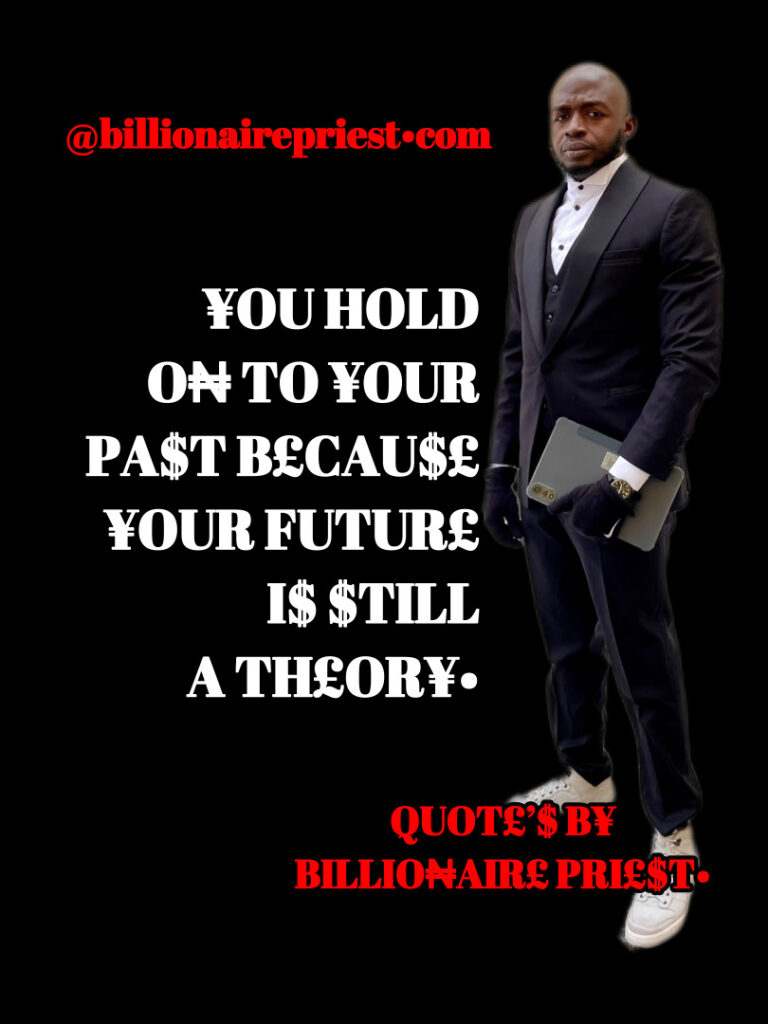
That’s a profound statement — and it captures something deeply human about our relationship with time, memory, and identity. Let’s unpack it carefully.
1. The nature of the past and the future
- The past is real — it has happened.
Your past is made up of actual experiences, choices, relationships, and emotions that you’ve lived. It may be painful, joyful, or confusing, but it exists as a concrete record in your memory and identity. - The future does not yet exist — it’s hypothetical.
The future is always uncertain. It’s built on expectations, possibilities, and plans — but it hasn’t solidified into something real. It only feels real because your mind projects into it.
So when the quote says, “Your future is still a theory,” it means that everything that hasn’t happened yet is still just a concept — a model, a dream, or a fear — not a certainty.
2. Why we hold onto the past
Because the future is uncertain, the mind often clings to what is known.
The past gives you:
- Identity: “This is who I’ve been” — it provides continuity.
- Safety: Known pain feels safer than unknown risk.
- Validation: Past stories justify your feelings, your ego, even your sense of right and wrong.
The psychological comfort of the past comes from its stability — even when it hurts, it’s familiar. When the future feels abstract or uncertain, your mind naturally gravitates back to what’s already defined.
3. The conflict between memory and possibility
Holding tightly to the past can also limit your capacity for growth.
- When past experiences dominate your thinking, they shape how you predict the future — you end up reliving patterns rather than creating new ones.
- The future, being “a theory,” requires imagination and trust — you have to believe in what doesn’t yet exist.
So clinging to the past often reflects a lack of faith in your ability to build the future; it feels safer to live inside the framework of what’s already known.
4. Integrating instead of clinging
You can’t erase your past — it’s part of you — but you can transform your relationship with it.
- Acknowledge it: Admit how it shaped you without letting it define you entirely.
- Extract wisdom: The goal isn’t to forget but to learn.
- Release identity dependence: You are not just your story; you are also the author of the next chapter.
When you stop treating the future as a “theory” and start engaging with it through action, each decision you make becomes a piece of evidence that turns possibility into reality.
5. In essence
You hold onto your past because it’s certain — it’s already proven.
You hesitate toward your future because it’s still a hypothesis waiting for courage to bring it to life.
The quote is a mirror for self-awareness: it invites you to recognize that you’re not meant to live in the past or for the future, but to use the past as grounding and the future as direction — while living fully in the creative act of the present.