 LUPER
LUPER
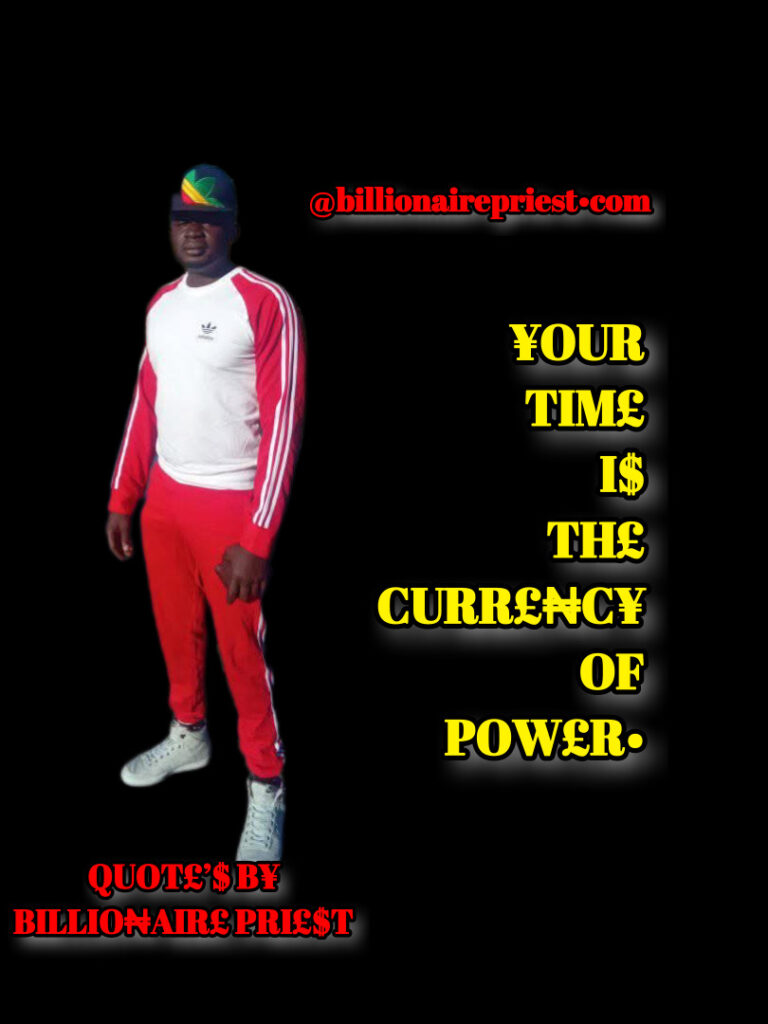
“Your time is the currency of power” means that power is less about money, status, or force—and more about who controls attention, effort, and choice over time. Time is the one resource that can’t be stored, recovered, or multiplied. Because of that, whoever directs time directs outcomes.
Let’s unpack this layer by layer.
1. Time Is the Only Truly Finite Resource
Money can be earned back.
Reputation can be rebuilt.
Energy can recover.
Time only moves in one direction.
Every hour spent is a permanent commitment. That makes time more valuable than wealth—and whoever decides how time is spent holds power.
A quick check for you:
Who decides how most of your day is used—you, or other people and systems?
2. Power = The Ability to Choose What Not to Do
Powerful people are not defined by how much they do, but by how much they refuse.
- They say no without apology
- They are hard to access
- Their attention is scarce
Scarcity creates value.
If your time is easily claimed, interrupted, or wasted, it signals low leverage—even if you’re busy.
Busy ≠ powerful
Controlled time = powerful
3. Time Reveals Real Priorities (Not Stated Ones)
People lie with words, but tell the truth with time.
- What you repeatedly give time to becomes your life
- What institutions demand your time for controls you
- What you delay loses power over you
That’s why manipulation often targets time:
- Endless scrolling
- Constant notifications
- Artificial urgency
- Overwork disguised as “hustle”
These aren’t accidents—they’re time extraction systems.
4. Attention Is the Front Door; Time Is the Vault
Attention is where power enters.
Time is where power settles.
Someone who can:
- Capture your attention briefly has influence
- Capture your time repeatedly has power over you
This is why modern power rarely looks like force—it looks like:
- Algorithms
- Schedules
- Expectations
- Social pressure
Ask yourself:
What consistently steals my time without improving my future?
That’s a power relationship.
5. Long-Term Time Control Beats Short-Term Force
Real power works slowly.
- Education shapes decades
- Habits compound
- Relationships mature
- Skills accrue value over years
People who control their time can invest it long-term.
People who don’t are trapped in reaction mode.
Reaction mode = serving other people’s priorities.
6. Saying “Yes” Is Often an Act of Submission
Every “yes” costs time.
When you say yes automatically:
- You accept someone else’s timeline
- You downgrade your own goals
- You trade future freedom for short-term peace
Powerful people tolerate discomfort now to protect time later.
Powerless people sacrifice time now to avoid discomfort.
7. Why Time Control Feels Like Freedom
When you control your time:
- You think more clearly
- You choose rather than react
- You build instead of maintain
- You shape identity deliberately
That’s why imprisonment, debt, and addiction are all forms of time theft.
8. The Core Insight
Money is stored labor.
Status is stored reputation.
Time is stored life.
Whoever decides where your life goes—hour by hour—holds power over you.
The ultimate form of power is not domination over others.
It’s sovereignty over your own time.
If you tracked the next 7 days honestly, who would your time say is in charge of your life?
If you want, we can:
- Look at how people unknowingly give away time
- Or turn this idea into practical rules you can use daily