 LUPER
LUPER
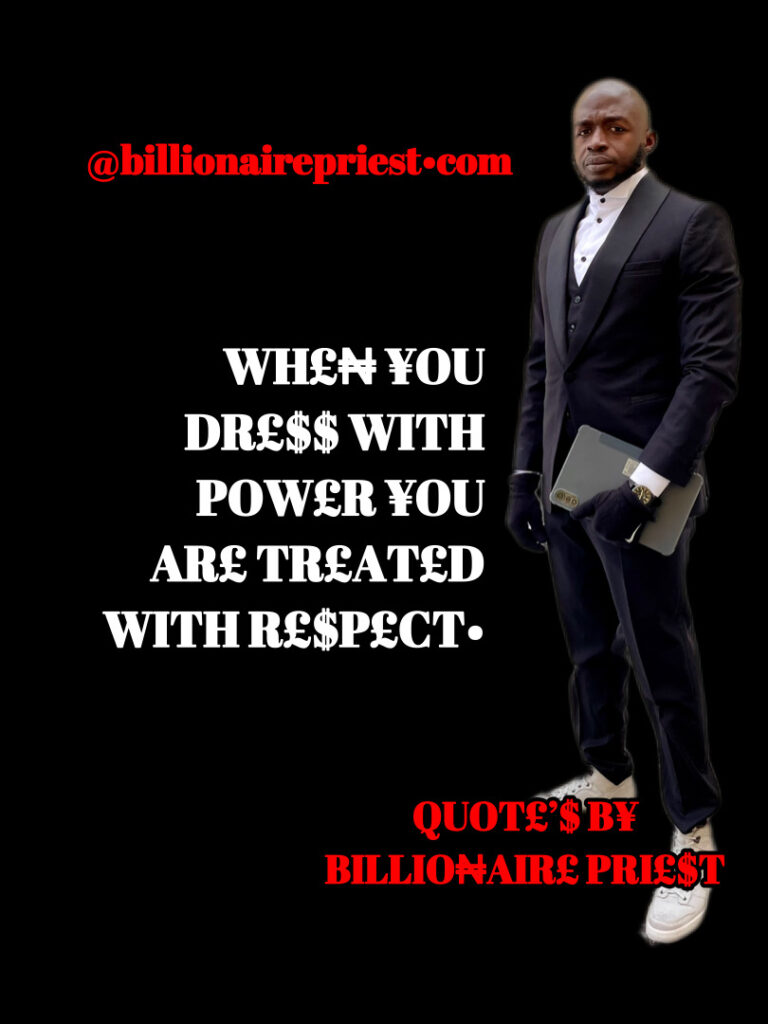
The statement “When you dress with power, you are treated with respect” is a vivid reflection on nonverbal signaling, perception, and social dynamics. It is not just about clothing — it’s about how outward appearance communicates authority, confidence, and competence, which influence the behavior of others toward you. Let’s unpack it deeply.
1. Clothing as a Signal
Humans are wired to read visual cues instantly. Clothing is a form of nonverbal communication:
- Style, cut, and fit signal attention to detail.
- Color and patterns convey mood, energy, and status.
- Symbols, fabrics, and accessories can communicate wealth, professionalism, or alignment with a certain culture.
Evolutionarily, humans have always interpreted adornments as indicators of capability, tribe, or rank. In modern society, clothing functions as a shortcut for first impressions.
2. Power Dressing and Perception
“Power dressing” is dressing in a way that conveys confidence, authority, and competence. Key elements include:
- Well-tailored clothing
- Neutral or commanding colors (black, navy, gray, deep red)
- Minimal distractions or clutter
- Attention to grooming and posture
Psychologist Amy Cuddy popularized the idea of “power poses” and how body language and outward presentation influence others’ perception. Clothing is an extension of this — it frames the mind of the observer before a word is spoken.
3. Respect as a Social Response
Respect is not automatically earned; it is granted in part by perception:
- People respond to cues of competence and authority.
- Dressing in a way that signals power creates a halo effect: others assume you are capable, confident, and deserving of deference.
- Social hierarchies respond to appearance — even if internal skill or status is still developing.
In short, respect is often first granted based on perceived social signals before being fully justified by merit.
4. Appearance vs. Substance
This does not mean clothing substitutes for competence, but it opens doors and establishes initial credibility.
- Clothing gives access and first-moment influence.
- Skill, intelligence, and character sustain long-term respect.
Without competence, power dressing can lead to short-lived impressions or eventual exposure. But without presence, competence may be ignored.
5. The Psychological Mechanism
Power dressing influences both external perception and internal mindset:
- External: Observers interpret your style as authority and take cues from it.
- Internal: Dressing with intention can boost confidence, posture, and assertiveness, making your behavior align with your presentation.
It’s a feedback loop: appearance informs perception, perception informs treatment, treatment reinforces behavior.
6. Social Proof and Influence
Humans are social creatures. We unconsciously follow cues from those who appear capable:
- Well-dressed individuals are often deferred to in meetings.
- They are more likely to be heard, credited, and followed.
- Authority signals, even subtle ones, shape social hierarchies.
Appearance is a shortcut for social algorithms, allowing observers to categorize and respond quickly.
7. Historical and Cultural Examples
- Politicians often use tailored suits and conservative colors to signal credibility and gravitas.
- Military uniforms signal rank and command obedience without words.
- Entrepreneurs or CEOs often adopt signature styles to communicate competence and control.
Across history, visual signals of authority have guided human behavior long before formal credentials existed.
8. Risk of Misinterpretation
Power dressing can backfire if:
- It is incongruent with behavior (e.g., arrogance without skill)
- It signals intimidation rather than authority in inappropriate contexts
- It is culturally or situationally mismatched
Respect is a conditional response: appearance grants initial leverage, but treatment adjusts as observers gather more information.
9. The Deeper Principle
The core insight is:
Humans respond to signals of competence and authority, often before verifying substance.
Clothing is a tool to frame your presence, influence perception, and shape social outcomes. It is part of a larger system of presentation, posture, and communication that governs how others treat you.
10. Practical Takeaways
- Align your style with the context in which you seek respect.
- Invest in fit, quality, and appropriateness — small details signal meticulousness.
- Use clothing as part of your personal authority toolkit, alongside skill, character, and confidence.
- Understand that respect earned from appearance is gateway respect; it must be reinforced by competence to last.
In essence: When you dress with power, you create a first impression of authority. That impression shapes how others respond, giving you access, influence, and credibility — even before your words or actions take effect.