 LUPER
LUPER
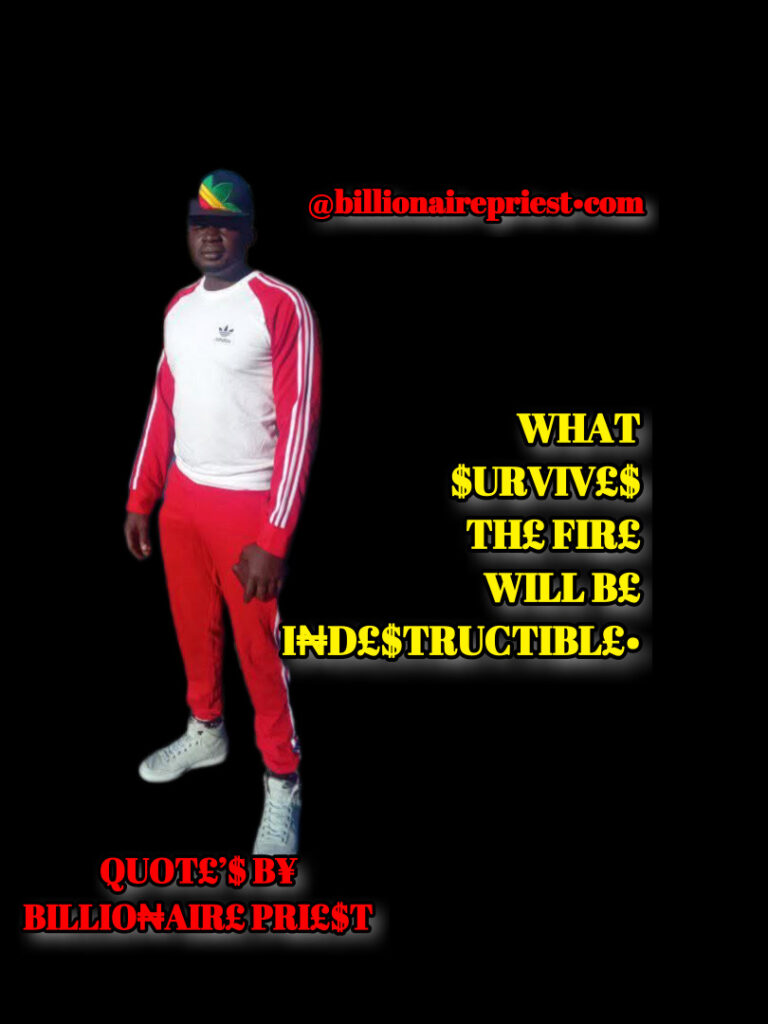
“What survives the fire will be indestructible” is a metaphor about testing, transformation, and truth. To explain it deeply, it helps to unpack what fire, survival, and indestructible symbolize.
1. Fire as a symbol of trial and destruction
Fire represents extreme pressure—hardship, suffering, failure, loss, criticism, or chaos. In real life, fire destroys what is weak, artificial, or poorly made. Symbolically, it stands for moments that strip life down to its core:
- personal crises
- emotional pain
- moral tests
- social or historical upheaval
Fire doesn’t negotiate. It reveals reality.
2. What burns away vs. what remains
When something goes through “fire,” two things happen:
- The nonessential is destroyed
Illusions, false identities, shallow beliefs, ego, habits built on comfort rather than conviction—these burn quickly. They were never meant to last. - The essential is exposed
What remains is what was truly strong: values, character, purpose, truth, love, resilience. These things don’t survive despite the fire; they survive because they are real.
In this sense, fire is not only destructive—it is revealing.
3. Survival as proof of authenticity
If something survives the fire, it has already faced the worst and endured. That survival becomes evidence:
- A belief that survives doubt is stronger than one never questioned.
- A relationship that survives hardship is deeper than one built only on ease.
- A person who survives suffering with integrity has a strength that can’t be taken away.
Survival is not luck here—it’s validation.
4. “Indestructible” does not mean invulnerable
This is important. “Indestructible” doesn’t mean immune to pain or change. It means:
- It may bend, but it doesn’t break.
- It may be altered, but not erased.
- It may suffer, but it retains its core.
Steel becomes stronger through fire. Gold is purified by it. What survives isn’t untouched—it’s transformed.
5. The deeper human meaning
On a human level, the quote suggests this truth:
The parts of you that remain after loss, failure, rejection, or fear—those are the real you.
Your character, your deepest values, your capacity to endure and rebuild—these cannot be destroyed because they are forged by the very forces meant to break you.
6. Why the idea is both harsh and hopeful
- Harsh, because fire is painful and unavoidable.
- Hopeful, because it promises that something real will remain.
Even when everything else is taken away, what survives becomes your foundation going forward.
In essence
“What survives the fire will be indestructible” means that true strength is not proven in comfort but in catastrophe. Whatever endures the most intense trials has passed the ultimate test—and nothing weaker than that was ever meant to last.