 LUPER
LUPER
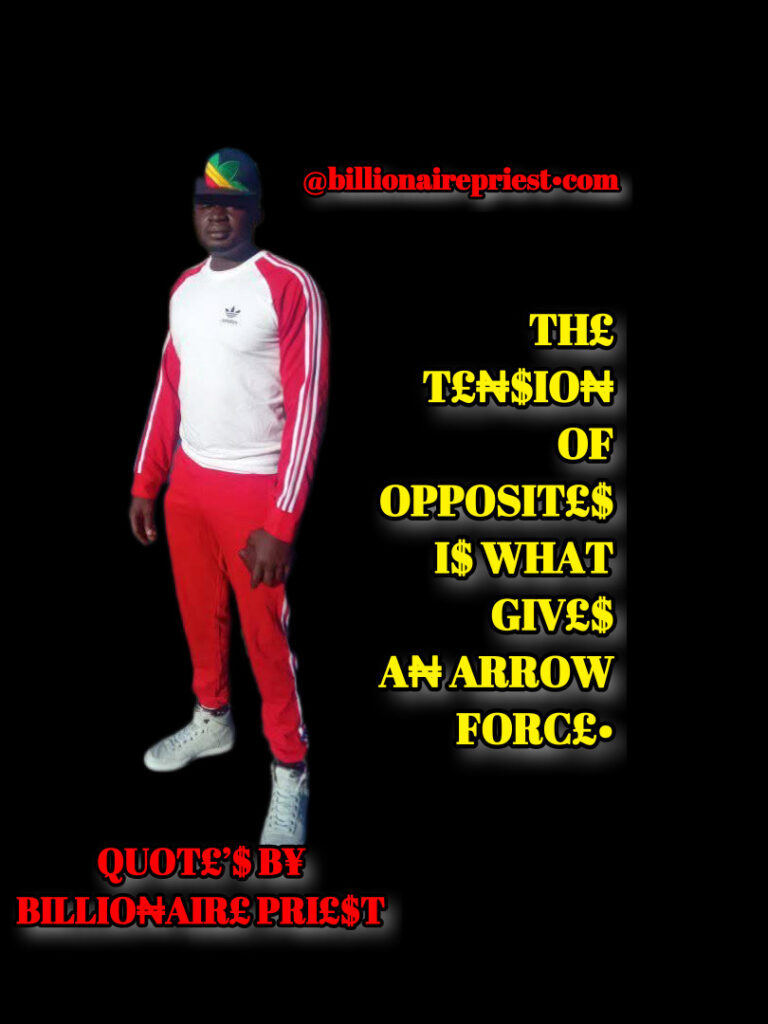
The phrase “The tension of opposites is what gives an arrow force” is a profound metaphor that speaks to the dynamics of energy, balance, and progress. It suggests that forces or elements that seem to oppose one another—rather than canceling each other out—actually work together to create power, movement, and direction. This concept can be explored in many areas: physics, philosophy, personal growth, and even in the context of life’s struggles.
Let’s break it down step by step to understand its deeper meaning.
1. The Physics of Tension
- Elastic Potential Energy: In the literal sense, the arrow itself can be seen as a physical object being propelled by the tension between two opposing forces: the string of the bow being pulled back, and the bowstring’s natural tension that resists the pull. When the archer pulls the string backward, they create a force that is stored in the bow as potential energy. The further the string is drawn, the more tension is generated, and the greater the potential energy becomes.
- Release and Kinetic Energy: When the string is released, the tension that had been built up suddenly transforms into kinetic energy. This energy propels the arrow forward at high speed, sending it toward its target. The strength of the arrow’s flight depends on the tension created between the string and the bow. Without this tension, there is no force to launch the arrow. The opposite forces—drawn-back string vs. bow’s tension—work together to release that energy in a focused, directed way.
In this context, the tension between the two opposing forces creates movement and direction, which is exactly what the arrow needs to hit its mark.
2. Metaphor for Life and Growth
The tension between opposites is not only a physical concept, but it’s also deeply metaphorical when applied to life. Life itself is full of contradictions, conflicts, and opposing forces—these are what drive progress and personal growth.
- Growth Through Conflict: Just like the tension between the bowstring and the arrow, life’s challenges can create a kind of “tension” that propels people forward. In personal growth, for example, moments of struggle and opposition are often the ones that push individuals to grow the most. If everything were always easy and smooth, there would be no need for development, no motivation to change or overcome obstacles.
- The Push and Pull of Life: Think of a person who faces a difficult decision. On one hand, they might be drawn toward comfort and security, but on the other, they may feel the pull toward adventure and growth. This internal tension—the push and pull of opposing desires or values—creates the energy for action. It’s in the resolution of this tension that the individual can make a choice, take a step forward, and move toward their goal.
The idea here is that growth and progress don’t happen in a vacuum or without resistance. The tension between opposing forces, whether external or internal, can be what gives us the strength to move forward and the clarity to make decisions.
3. The Role of Opposites in Balance and Harmony
- Yin and Yang: In many philosophical systems, particularly in Eastern philosophy (like Taoism), opposites are seen as complementary forces that create balance and harmony in the universe. The Yin-Yang symbol embodies this idea, with black and white parts of the circle interwoven. The black (Yin) represents darkness, femininity, and passivity, while the white (Yang) represents light, masculinity, and activity. These two forces are not in conflict, but rather they coexist, and together they create balance. Without one, the other would lose its meaning. It’s the interplay of these forces that sustains life.
- Balancing Tension: Just as an arrow needs the tension between the bowstring and the bow to fly, in life, we need the tension between opposite forces (like rest and action, doubt and belief, joy and sorrow) to maintain balance and energy. This tension doesn’t destroy us; rather, it fuels our ability to move forward with purpose.
- The Middle Path: In many spiritual traditions, the idea of balance or harmony emerges through the resolution of opposites. For instance, Buddhism teaches the “Middle Path,” which involves finding a balance between extremes—neither too indulgent nor too ascetic, neither too attached nor too detached. The tension between these opposites is a natural part of the human condition, and learning how to navigate them is seen as a path to wisdom and peace.
4. Creativity and the Dynamic of Tension
- Creative Tension: In the realm of creativity, the tension between opposites is often what sparks new ideas. Creative people often work with contradictory concepts, ideas, or techniques to generate something fresh. This might be combining two different musical styles, blending modern and ancient design elements, or fusing various cultural perspectives to create a unique art form. The tension of opposites—like harmony and dissonance in music or simplicity and complexity in visual art—creates dynamic, engaging works of creativity.
- Innovation Through Tension: In the world of science, technology, and invention, progress often comes from the tension between what is and what could be. For example, the tension between what the world is capable of producing (given current resources and technologies) and the new possibilities that visionaries see (and strive to realize) is what drives innovation. The force that propels human progress is the creative tension between the limitations of the present and the potential of the future.
5. Conflict and Resolution: The Engine of Change
- Social Change: On a societal level, the tension between conflicting ideas and values can lead to significant change. Consider movements for civil rights, environmental sustainability, or social justice—these are often born from the tension between oppressive systems and the desire for equality. This conflict is not merely a destructive force; it is the very thing that creates the momentum for change.
- Personal Transformation: On a personal level, we often experience tension between our old selves (who we were) and our aspirations (who we want to become). This internal conflict can sometimes feel painful or uncomfortable, but it is also the force that drives personal transformation. Without the tension of facing our fears, confronting our weaknesses, or pushing against our comfort zones, we would not grow or evolve as individuals.
6. The Arrow’s Purpose: Direction and Focus
- Focus of Energy: The arrow, once released, doesn’t fly randomly. Its flight is guided by the tension that was carefully drawn and directed by the archer. This focus represents how tension can give us direction in life. Just as the arrow is aimed at a target, the tension between opposing forces in our lives can provide us with clarity, focus, and purpose. It’s not just a random collection of energy; it’s directed energy, aimed at something meaningful.
- Overcoming Obstacles: The tension that an arrow experiences is also a metaphor for overcoming obstacles. Just as an arrow must overcome the resistance of the air and the pull of gravity, humans must overcome various challenges in order to reach their goals. These challenges—like the tension in the bow—are not things to avoid, but things that help propel us forward.
Conclusion: The Power of Tension
The tension between opposites creates energy, direction, and movement—whether in the physical world, within our personal lives, or in the broader flow of society and creativity. Much like an arrow that requires the pull of the bowstring against the resistance of the bow to fly, human progress requires the dynamic force of conflicting elements working together.
In life, rather than seeing tension and conflict as things to avoid, we can recognize them as catalysts for growth. The opposing forces of comfort and challenge, certainty and doubt, action and rest—they are not just opposites, but complementary forces that can propel us forward. Embracing this tension and learning how to channel it can give us the strength and focus to move toward our goals, achieve personal growth, and create change in the world around us.
Do you see any areas in your life where this idea of “tension” might be at play—where opposing forces are actually helping you move forward?