 LUPER
LUPER
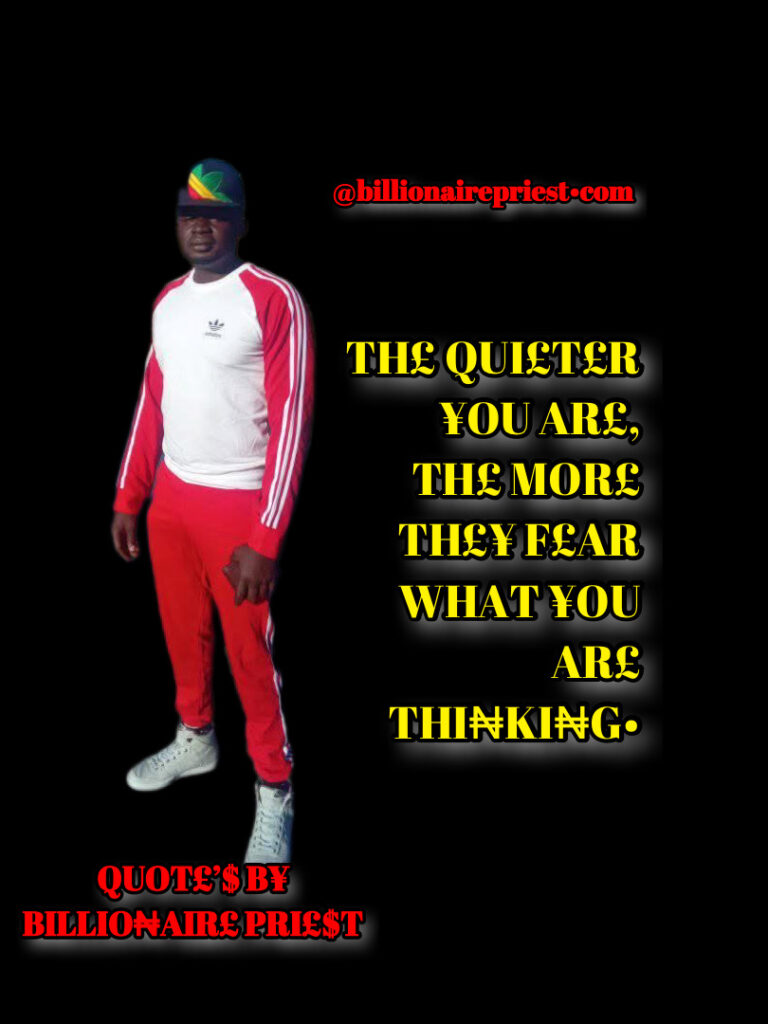
The phrase “The quieter you are, the more they fear what you are thinking” speaks to the psychological power of silence and the human tendency to fill in the gaps when they don’t have access to all the information. It suggests that when someone is quiet—especially in situations where most people are vocal or expressive—others may become more anxious or curious about what that person might be thinking or planning. Silence can carry a mysterious, sometimes intimidating weight, and the longer someone remains silent, the more others may fear the unknown thoughts or intentions behind that silence.
Let’s break this down deeper:
1. Silence Creates Mystery
When someone remains silent, it often leads others to imagine what they might be thinking. This can create an air of mystery around that person. Humans are naturally inclined to be social and seek understanding from others. We tend to be more comfortable when we know what someone else is thinking or feeling because it allows us to predict their behavior. Silence disrupts that predictability, making it harder for people to gauge what someone might do next.
The quieter someone is, the more others are forced to create assumptions about their thoughts. This uncertainty can be uncomfortable, and it often leads to others speculating, sometimes projecting their own insecurities or fears onto the silent person. In many ways, silence amplifies the unknown—and the unknown is often more frightening than the known.
2. The Power of Non-Response
In many social or conflict situations, silence can be more powerful than words. When someone chooses not to respond, especially when others are waiting for a reaction, it can signal that they are either deeply thinking or that they are in control of their emotions. This can create a sense of unease or tension in others because they don’t know how to interpret the silence.
For example, if you’re in a meeting or group discussion, and you’re quiet while everyone else is talking, your silence might be seen as you withholding judgment or holding a deeper opinion. People might fear that you’re silently disapproving or that you’re processing something that could come out later in a way that surprises or challenges them.
3. Silence as a Sign of Emotional Control
Silence often conveys a sense of emotional control. In many situations, people who are more outwardly expressive may be seen as less in control of their emotions. They may speak quickly in response to stress, excitement, or anxiety. A quieter person, on the other hand, may appear to be less reactive, perhaps even able to hold back their emotions and carefully consider their responses. This can make others uneasy, as it suggests that the silent person is calculating their moves and is more strategic.
The more someone withholds their thoughts or reactions, the more others may fear that they are not just holding back—they are waiting for the right moment to act or speak. This sense of delayed action can make people nervous, because they don’t know what the quiet person will do when they finally break their silence.
4. The Silent Type and Authority
In many social contexts, the “quiet” person is often perceived as someone who commands authority without needing to assert themselves loudly. This can be especially true in group settings, where someone who chooses not to speak often holds power in a subtle way. Their silence can convey that they don’t need to prove themselves by talking or defending their position. In fact, this lack of verbal engagement can signal that they have confidence in their knowledge or understanding of the situation, and they don’t need to fill the air with words to establish their place.
People often fear this type of quiet authority because it suggests that the person isn’t swayed by external pressures. Their thoughts are more private, and they may be less predictable in how they choose to engage, making them harder to influence or manipulate.
5. Silence as a Form of Psychological Power
Psychologically, silence can be a subtle form of control. In conversations or conflicts, silence can be used to make the other person feel uncomfortable, forcing them to either speak more or question their own thoughts and opinions. This tactic is sometimes used in negotiation or persuasion to create tension, as the quiet person’s lack of response may make the other person feel like they are being judged or analyzed.
In relationships or social situations, silence can make others feel vulnerable because they don’t have the feedback or reassurance they might be seeking. People often find comfort in knowing where others stand—silence makes them feel uncertain about where they stand in relation to the quiet person, which can make them fear that they’ve done something wrong, that the other person is holding something back, or that they might be unknowingly walking into an uncomfortable situation.
6. Silence and Self-Protection
From the perspective of the person who is silent, withholding words can sometimes be a form of self-protection. Speaking too much or revealing too much can leave you vulnerable, and in certain situations, it’s safer to keep your thoughts to yourself. For instance, in a heated conversation, keeping quiet might prevent you from saying something you’ll regret later. In moments of personal reflection, silence can allow you to think carefully before responding. This self-protective silence can be unsettling to others, because it suggests that you have something to hide, something they don’t have access to. They might fear that you are keeping your cards close to your chest, and as a result, they might feel threatened or insecure.
7. The Fear of Hidden Intention
Silence often creates space for hidden motives or unspoken intentions to emerge in people’s imaginations. When someone doesn’t say much, others may start to wonder what they are planning or what they are withholding. This can lead to a sense of paranoia or fear, especially in situations where trust is important. For example, in a workplace, if someone stays quiet in meetings, colleagues might worry that they are secretly plotting or disagreeing with the direction of the team. The absence of clear verbal feedback might lead others to fear that they’re being left out of the loop or that the quiet person is about to make a move that could disrupt the status quo.
8. Social and Cultural Contexts
The impact of silence can vary depending on the cultural or social context. In some cultures, silence is seen as a sign of wisdom or respect. In others, it may be seen as a sign of disengagement or even defensiveness. In high-stakes or competitive environments, however, silence often feeds into the psychological uncertainty, as people begin to overanalyze every small detail, fearing that their silent counterpart has a better understanding or stronger position.
In Summary:
“The quieter you are, the more they fear what you are thinking” is rooted in the idea that silence creates uncertainty and invites speculation. When someone is quiet, others often fear what they might be keeping to themselves—whether it’s anger, disapproval, or a hidden agenda. Silence disrupts the flow of information, making it harder for people to predict behavior and intentions. This creates a psychological tension, as others are forced to imagine what the silent person is thinking, and this uncertainty can be more unsettling than direct confrontation. In this way, silence becomes a powerful tool—whether it’s used intentionally or not—that influences how others perceive you and how they act around you.