 LUPER
LUPER
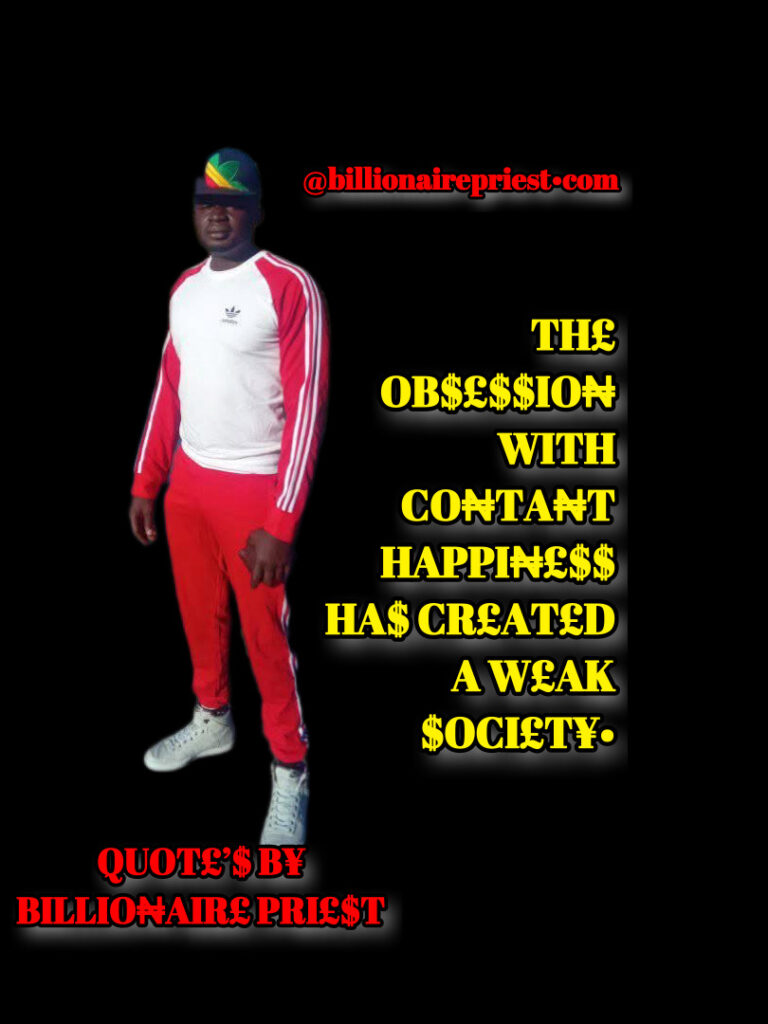
“The obsession with constant happiness has created a weak society” is a sharp claim, but it points to something real and important. Let’s take it apart carefully.
1. What “constant happiness” really means today
Historically, happiness meant a byproduct of a meaningful life.
Today, it’s often treated as:
- A permanent emotional state
- A right rather than a result
- Something to be optimized, displayed, and protected at all costs
Modern culture quietly teaches:
- “If you’re uncomfortable, something is wrong”
- “Negative emotions mean failure”
- “Avoid pain instead of learning from it”
That shift matters.
2. Happiness became the goal instead of the compass
Emotions are meant to inform, not rule.
Sadness → something matters
Anger → a boundary was crossed
Fear → there is risk
Boredom → growth is needed
When society treats happiness as the goal, it starts medicating, distracting, or suppressing these signals instead of listening to them.
That creates people who:
- Avoid discomfort
- Quit when things feel hard
- Confuse peace with pleasure
- Confuse struggle with harm
That’s not well-being. That’s fragility.
3. Why discomfort builds strength
Every form of strength—mental, emotional, moral—comes from tolerated difficulty.
- Muscles grow by stress.
- Confidence grows by surviving failure.
- Wisdom grows by sitting with uncertainty.
- Character grows by choosing values over comfort.
A culture that treats discomfort as something to eliminate trains people to:
- Outsource resilience
- Demand protection from reality
- Interpret challenge as injustice
That’s how weakness spreads—not physically, but psychologically.
4. The emotional flattening problem
When happiness is mandatory:
- Sadness becomes shameful
- Anger becomes “toxic”
- Fear becomes something to hide
People stop learning how to regulate emotions and instead learn how to avoid them.
Avoidance leads to:
- Anxiety (because fear is never faced)
- Low frustration tolerance
- Identity built on mood instead of values
Ironically, chasing happiness this way often produces more misery, not less.
5. Meaning vs happiness
Here’s the crucial distinction:
- Happiness is fragile and temporary.
- Meaning is stable and earned.
A meaningful life includes:
- Responsibility
- Sacrifice
- Effort without immediate reward
- Moments of deep unhappiness that still feel worthwhile
Societies that prioritize meaning produce people who can endure.
Societies that prioritize happiness produce people who collapse when it disappears.
6. Why this shows up socially
At a societal level, obsession with happiness leads to:
- Low tolerance for disagreement
- Fear of honest speech (because it might upset)
- Overprotection that delays maturity
- Expectation that institutions remove all discomfort
Instead of asking:
“What kind of person should I become?”
People ask:
“How do I feel right now?”
That’s a child’s question applied to adult life.
7. A stronger alternative
Strength doesn’t come from being happy all the time.
It comes from being capable of unhappiness without breaking.
A resilient society teaches:
- Emotional range, not emotional purity
- Responsibility before comfort
- Growth before ease
- Self-mastery over self-soothing
Happiness still matters—but as a side effect of living well, not the point of life itself.
8. One-sentence core idea
A society obsessed with feeling good forgets how to be strong, and when life inevitably hurts, it has no muscles to carry the weight.