 LUPER
LUPER
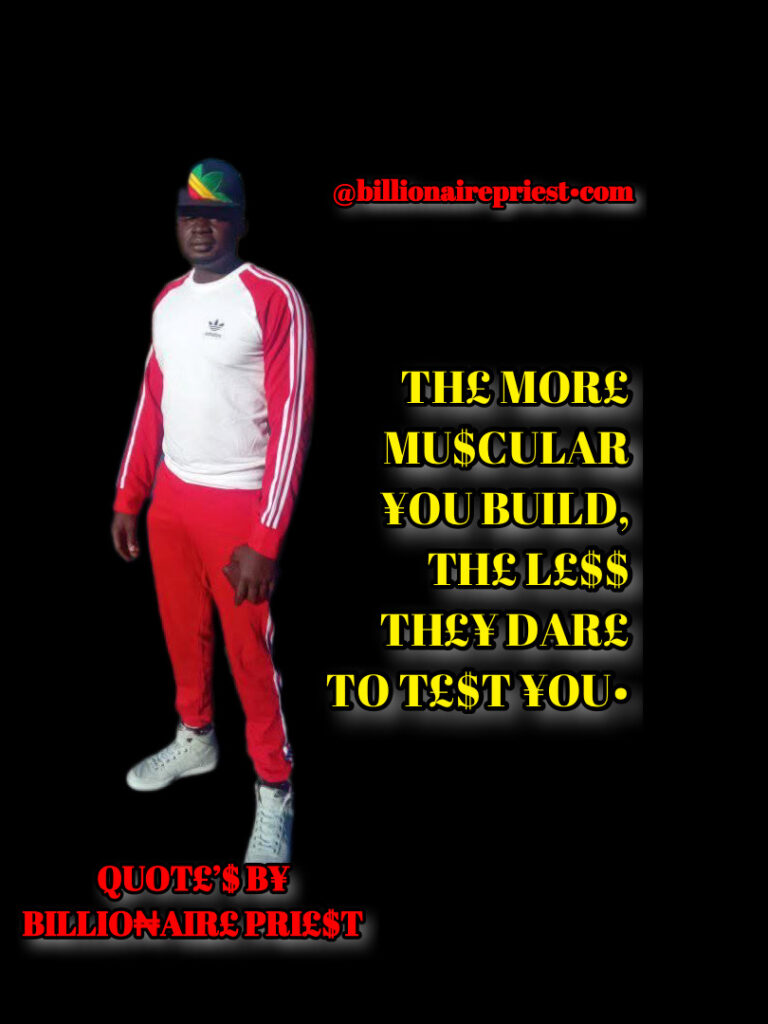
The phrase “The more muscular you build, the less they dare to test you” taps into a concept often associated with physical strength, self-confidence, and the way people perceive you based on your appearance or abilities. It speaks to the psychological impact of physical power, not just in terms of physical confrontation, but also in terms of how people interact with you socially, emotionally, and mentally. Here’s a deeper breakdown of this idea:
1. Physical Strength as a Form of Protection
Building muscle or getting physically stronger can create a sense of security—both for yourself and in the way others perceive you. On a primal level, physical strength has historically been linked to the ability to defend oneself or impose consequences on others. When you look physically imposing, it’s natural for others to hesitate before challenging or testing you. This is not necessarily about violence, but about the unspoken recognition that you have the capability to defend yourself if necessary.
This idea aligns with the concept of “strength as a deterrent.” It doesn’t mean you’re out looking for a fight, but people often assess others’ strength before deciding whether to push boundaries, be confrontational, or take advantage of someone. The more muscular you are, the less likely people are to test you because the risk of facing consequences seems higher to them.
2. Psychological Impact of Strength
Your physical appearance, especially the visible manifestation of muscle, can significantly affect how people view you in non-physical contexts as well. Strength is often subconsciously associated with confidence, assertiveness, and resilience. When you’re strong, you carry yourself differently—there’s a certain aura of self-assurance that comes with knowing your body is capable of more than just basic movements. This can lead to others respecting you more or choosing not to challenge you in various situations, whether that’s in debates, social interactions, or even in work or school settings.
When people see that you’ve put in the effort to build muscle, they might also see you as someone who has the discipline and determination to achieve goals, which can lead them to perceive you as someone not to be taken lightly, even beyond just physical strength.
3. Social Dynamics and Respect
In many cultures, physical strength commands a certain level of respect, especially in situations where dominance, control, or self-reliance are valued. Think of it as a silent form of social influence—people often respect those who appear strong because they seem capable of protecting themselves, their values, and the people they care about.
Additionally, there’s a psychological aspect known as “social deterrence.” People who have the confidence to stand their ground or who physically look like they can defend themselves are less likely to be targeted for bullying, manipulation, or disrespect. The stronger you are, the more you send a message that you won’t tolerate being tested or mistreated.
4. Muscle and the Perception of Authority
Muscle-building also ties into the idea of authority or leadership in certain social circles. In communities where strength is valued (sports teams, gyms, certain professional environments), the more muscular you are, the more “status” you might command. Even in non-physical environments, people tend to defer to those who show themselves capable of overcoming physical challenges, because they symbolize resilience, control, and the ability to persevere.
In a more metaphorical sense, this also plays into the idea that strength (whether physical or mental) often correlates with the ability to handle life’s challenges—“If you can handle physical hardship, you can probably handle other pressures too.”
5. Building Muscle as a Symbol of Discipline and Control
When you invest time and energy into building muscle, it’s often a reflection of your self-discipline. The process of muscle-building requires regular training, good nutrition, rest, and patience. This process can be symbolic of your overall approach to life—those who see you putting in that kind of effort may also see you as someone who takes control of their life. People may be less likely to test someone who demonstrates such dedication because it signals that they can handle challenges, not just in the gym, but in life in general.
6. The Limits of This Idea
While the phrase might sound like it’s universally true, it’s important to remember that strength alone doesn’t guarantee respect or prevent people from testing you. There are other factors—like communication, intelligence, emotional intelligence, and personal integrity—that influence how others interact with you. In some situations, people may challenge you for reasons unrelated to physical strength, like testing your boundaries or undermining your self-worth.
Also, muscle-building doesn’t always equate to emotional or mental strength. Strength in one area doesn’t necessarily translate to strength in others. People might still test your limits in non-physical ways if they perceive emotional or mental vulnerability.
In Summary:
The more muscular you become, the less likely others are to test you, because physical strength often signals confidence, discipline, and the ability to stand your ground. It’s a psychological deterrent, signaling that you’re someone who’s capable of defending themselves—whether in a physical, social, or mental sense. It’s about projecting an image of strength that people recognize and respect, leading them to think twice before challenging or confronting you. However, strength in one area doesn’t always mean invulnerability in all others, so there’s always more to consider beyond just physical appearance.