 LUPER
LUPER
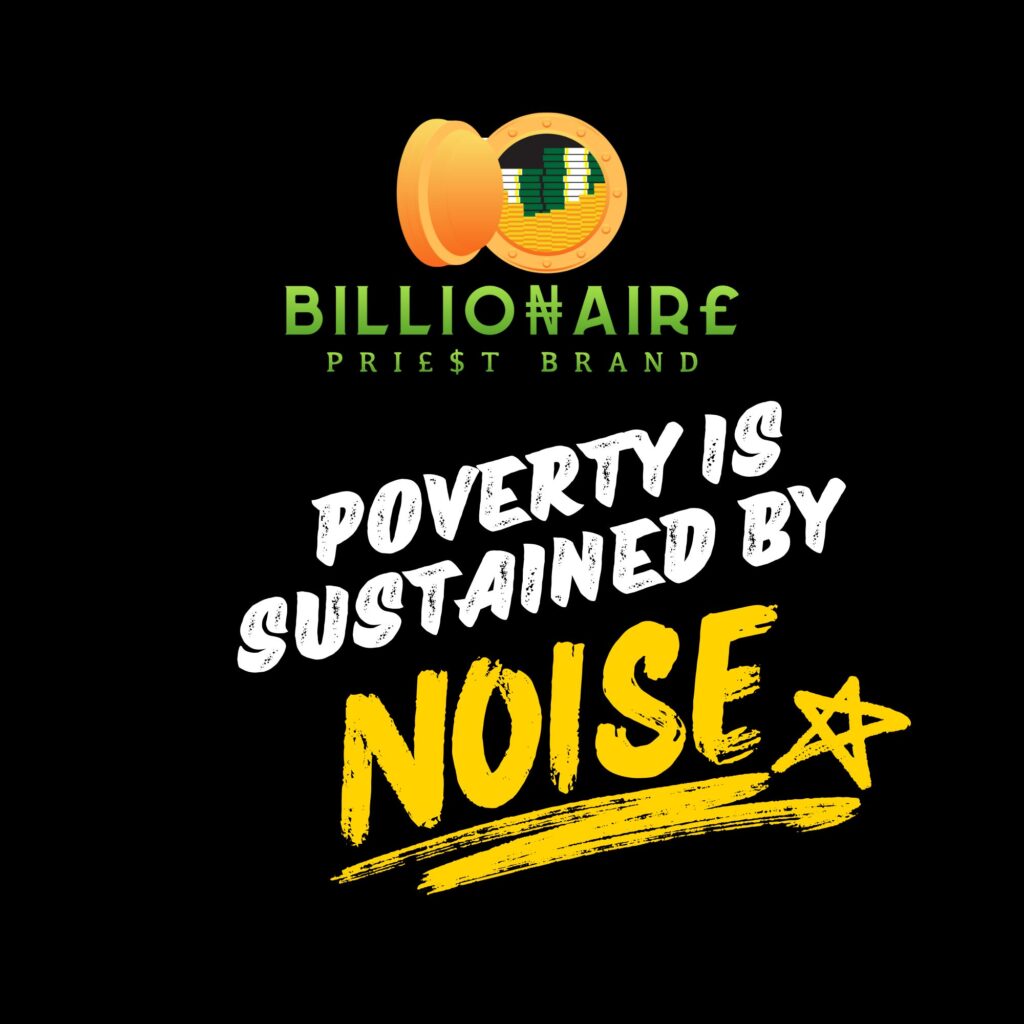
“Poverty is sustained by noise.”
That statement is both metaphorical and strategic. Let’s unpack it deeply — psychologically, economically, spiritually, and structurally.
1. Mental Noise: The Poverty of Attention
Noise is distraction.
And distraction is expensive.
In the modern era — especially in hyper-digital societies like United States — attention has become currency. Platforms compete for it. Media monetizes it. Algorithms fragment it.
When someone lives in constant noise:
- Endless notifications
- Gossip and drama
- Social comparison
- Reactionary thinking
- Fear-based headlines
Their cognitive bandwidth is consumed.
Wealth requires:
- Deep focus
- Long-term thinking
- Emotional regulation
- Strategic patience
Noise keeps a person reactive. Wealth requires being proactive.
A distracted mind struggles to compound anything — money, skills, relationships, or insight.
2. Economic Noise: Consumption Over Creation
Noise markets urgency.
“Buy now.”
“Limited drop.”
“Flash sale.”
“New trend.”
Consumer economies — amplified by platforms like Instagram and TikTok — thrive on stimulating desire faster than discipline can form.
Noise does three things economically:
- Encourages impulse spending
- Normalizes debt
- Distracts from skill acquisition
Wealth, on the other hand, is quiet:
- Investing regularly
- Building systems
- Learning high-leverage skills
- Delayed gratification
Noise accelerates spending cycles.
Silence enables investment cycles.
Poverty persists where consumption is louder than creation.
3. Emotional Noise: Survival Mode Thinking
Chronic stress produces internal noise:
- Anxiety
- Hyper-vigilance
- Short-term decision making
- Fear-based choices
Neurologically, scarcity shifts the brain toward immediate survival. Long-term planning weakens. Research in behavioral economics calls this “scarcity mindset.”
When every decision feels urgent, strategic patience disappears.
Noise keeps the nervous system inflamed.
Inflamed systems don’t build empires.
4. Cultural Noise: Narratives That Limit Identity
Noise isn’t only digital — it’s ideological.
Messages like:
- “People like us don’t succeed.”
- “Rich people are evil.”
- “Stability is safer than ambition.”
- “Dream smaller.”
These narratives circulate socially and politically, sometimes reinforced by public discourse and institutions.
They shape identity.
If identity is small, ambition is filtered.
If ambition is filtered, action is limited.
If action is limited, income is capped.
Noise sustains poverty by defining what feels “normal.”
5. Strategic Silence: The Antidote
Historically, wealth builders understood something profound:
Silence is leverage.
Consider investors like Warren Buffett.
His strategy is famously simple: think long-term, avoid emotional swings, ignore market hysteria.
Markets are loud. Compounding is quiet.
Silence allows:
- Pattern recognition
- Deep work
- Emotional control
- Vision clarity
Noise scatters energy.
Silence concentrates it.
6. Spiritual Noise: Disconnection from Purpose
If we interpret this spiritually:
Noise separates a person from inner conviction.
When someone constantly consumes other people’s opinions, trends, and fears, they lose:
- Internal guidance
- Discernment
- Clarity of calling
Without clarity of purpose, income becomes accidental instead of intentional.
Wealth is often purpose aligned.
Noise fragments purpose.
7. Systems Perspective: Structural Noise
Even structurally, poverty environments are louder:
- Crime
- Overcrowding
- Information chaos
- Unstable institutions
- Economic volatility
Stability creates space for strategy.
Instability forces reaction.
When a system produces constant uncertainty, individuals are pushed into short-term survival loops.
The Core Thesis
Noise sustains poverty because:
- It fractures attention.
- It triggers impulsivity.
- It inflames fear.
- It limits identity.
- It prevents long-term thinking.
- It blocks clarity of purpose.
Wealth, by contrast, is built in disciplined silence.
Not literal silence — but mental, emotional, and strategic quiet.
A Deeper Reframe
The opposite of poverty is not money.
The opposite of poverty is clarity + discipline over time.
Noise erodes both.