 LUPER
LUPER
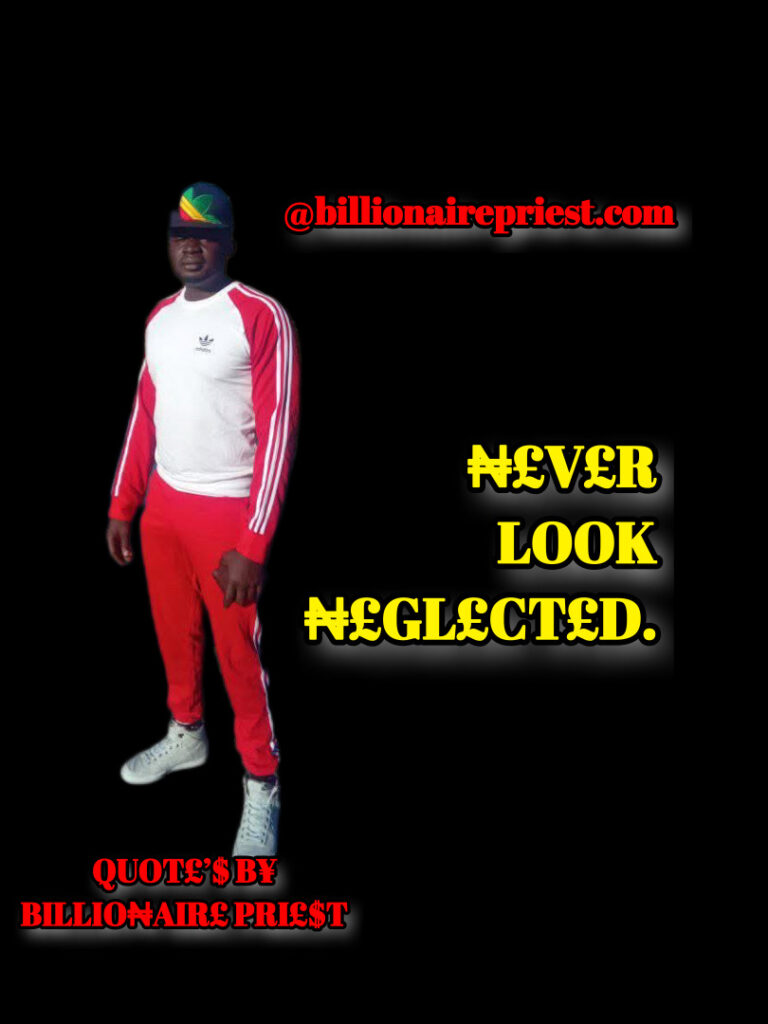
The phrase “Never look neglected” is a short, powerful piece of advice that speaks to the importance of self-respect, presentation, and the signals we send to the world. Here’s a breakdown of its deeper meaning:
🔹 1. Your Appearance Sends a Message
Whether we like it or not, people often judge us by what they see first — how we present ourselves. Looking neglectedcan send unintended messages:
- That you don’t care about yourself.
- That you lack discipline or self-awareness.
- That you are vulnerable or not in control.
This applies not just to clothing, but to posture, grooming, hygiene, and even energy.
🔹 2. Self-Presentation Reflects Self-Worth
When you take care of your appearance, it communicates:
- Self-respect: You value yourself.
- Intentionality: You make deliberate choices about how you show up.
- Confidence: You’re in command of your life, even when things are hard.
On the flip side, neglect can reflect (or suggest) inner chaos or low self-esteem — even if that’s not actually the case.
🔹 3. The World Treats You How You Treat Yourself
People tend to respond to you based on how you present yourself. If you:
- Carry yourself with dignity,
- Look put-together,
- Show that you care for yourself,
…others are more likely to treat you with respect, take you seriously, and trust your competence.
🔹 4. “Never Look Neglected” ≠ Vanity
This advice isn’t about being vain, flashy, or obsessed with image. It’s about dignity and self-discipline:
- You can dress simply, but still appear neat and intentional.
- You can be going through hardship, but still carry yourself with strength.
It’s about not letting the world see you unravel, even when you’re struggling internally.
🔹 5. It’s Also About Energy
“Looking neglected” isn’t just physical. It’s also about your presence:
- Are you slouched, avoiding eye contact, giving off resignation?
- Or are you alert, grounded, and engaged — even if quietly?
Your energy is part of your presentation.
✅ In Summary:
“Never look neglected” is a reminder to maintain your standards — for yourself, not just for others. Because how you carry yourself can shape how you’re perceived, and eventually, how you’re treated.