 LUPER
LUPER
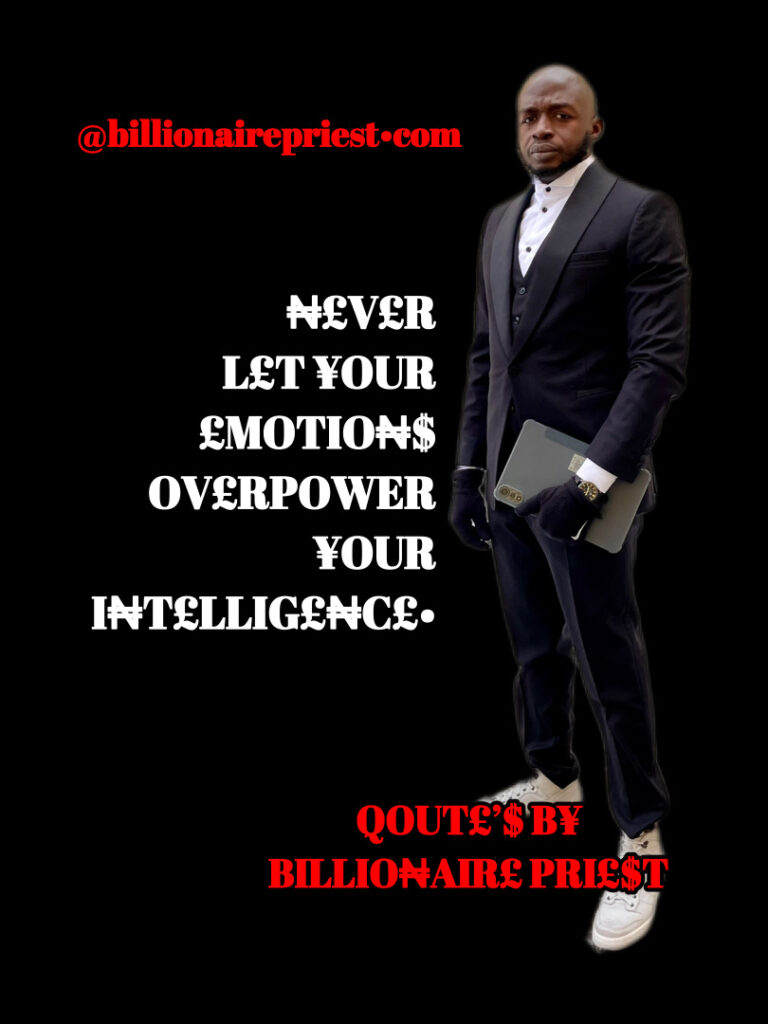
“Never let your emotions overpower your intelligence” is really about self-governance.
It doesn’t mean suppress emotion.
It means emotion should inform you — not control you.
To understand this deeply, we need to examine how emotion and intelligence interact inside you.
1. Emotion Is Fast. Intelligence Is Slow.
Emotion is immediate.
It reacts in milliseconds:
- Anger when disrespected
- Fear when uncertain
- Jealousy when threatened
- Attraction when stimulated
This system evolved for survival. It’s automatic and protective.
Intelligence — particularly rational thought — is slower.
It evaluates:
- Context
- Consequences
- Patterns
- Long-term outcomes
The problem is not emotion.
The problem is unregulated emotion.
When emotion spikes high enough, reasoning temporarily shuts down.
2. What “Overpower” Actually Means
Emotion overpowers intelligence when:
- You speak before thinking
- You send the text you regret
- You quit impulsively
- You escalate instead of de-escalate
- You assume instead of verify
The feeling becomes the truth.
“I feel disrespected → Therefore I was disrespected.”
“I feel insecure → Therefore something is wrong.”
“I feel angry → Therefore I must act.”
But feelings are signals, not conclusions.
3. Intelligence Without Emotion Is Also Dangerous
Pure logic without emotion creates:
- Coldness
- Disconnection
- Lack of empathy
- Moral blindness
History shows examples of highly intelligent individuals who lacked emotional regulation and empathy, causing harm despite strategic brilliance.
The goal is not emotion suppression.
The goal is emotional mastery.
4. The Role of Emotional Regulation
Psychologist Daniel Goleman popularized the idea of emotional intelligence — the ability to:
- Recognize your emotions
- Understand why they’re happening
- Regulate them
- Respond intentionally
Emotional intelligence doesn’t eliminate emotion.
It integrates it.
You still feel anger.
But you choose the timing and form of expression.
You still feel fear.
But you assess whether it’s rational.
5. Why Emotions Hijack Intelligence
Strong emotions narrow perception.
When angry:
- You focus on offense.
- You ignore nuance.
When anxious:
- You focus on threat.
- You ignore probability.
When infatuated:
- You focus on positives.
- You ignore red flags.
This is why people:
- Stay in toxic relationships.
- Ruin careers over pride.
- Destroy trust over ego.
- Make financial decisions out of fear or hype.
Intensity feels like certainty.
But intensity is not accuracy.
6. Power Is in the Pause
The space between stimulus and response is where intelligence lives.
Instead of:
Emotion → Reaction
Shift to:
Emotion → Pause → Analysis → Response
That pause can be seconds.
But it changes outcomes dramatically.
Leaders like Abraham Lincoln were known for writing angry letters and never sending them — allowing emotion to cool before acting.
That’s intelligence governing emotion.
7. Practical Application
When emotion rises:
- Name it: “I’m feeling angry.”
- Separate fact from interpretation.
- Ask: What outcome do I want long-term?
- Delay irreversible decisions.
- Act in alignment with your values, not your intensity.
Emotions pass.
Consequences stay.
8. The Deep Insight
Emotions are energy.
Intelligence is direction.
Energy without direction becomes destruction.
Direction without energy becomes paralysis.
The statement “Never let your emotions overpower your intelligence” is about hierarchy, not elimination.
Emotion should advise.
Intelligence should decide.
Final Truth
Strong people are not those who feel less.
They are those who:
- Feel deeply
- Think clearly
- Act deliberately
When intelligence governs emotion, you become predictable to yourself — not controlled by moods, impulses, or temporary storms.
That stability is real power.