 LUPER
LUPER
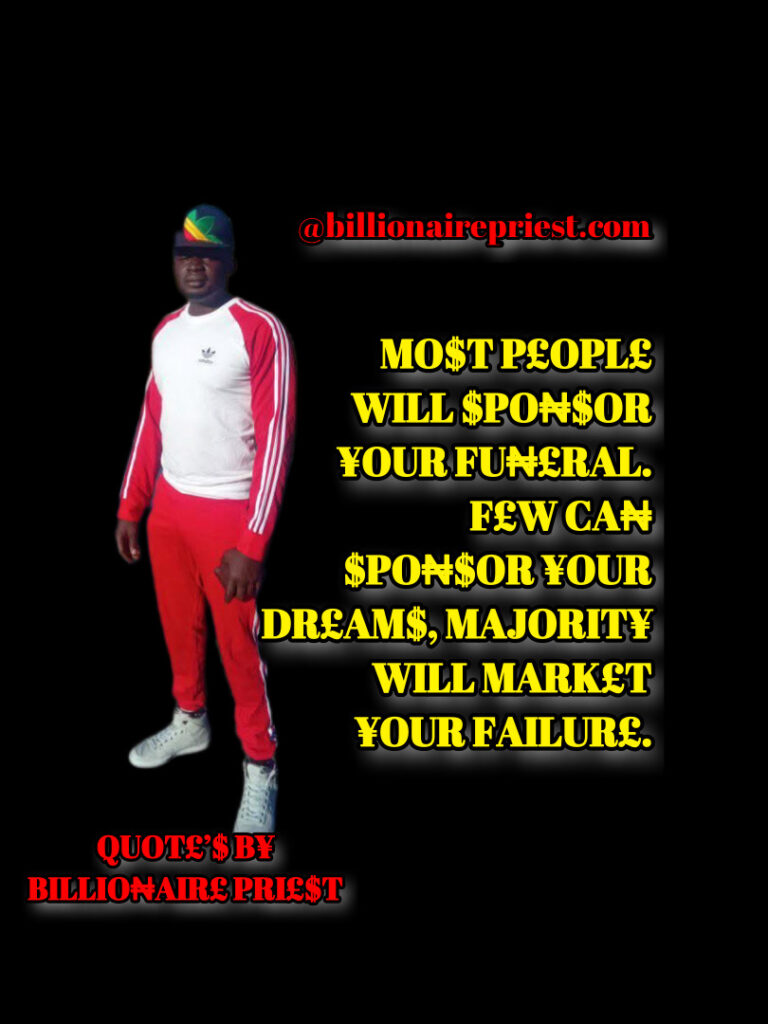
That statement is a powerful reflection on human nature, social psychology, and the difference between passive sympathy and active support. Let’s break it down deeply.
1. “Most people will sponsor your funeral.”
This symbolizes support after it’s too late.
When someone dies, people show up:
- They contribute money.
- They post emotional tributes.
- They speak highly of the person.
- They express regret: “He was a good person.”
Why?
a) Death is safe
Supporting a funeral costs nothing emotionally. There’s no competition, no risk, no insecurity involved. The person is no longer a threat to anyone’s ego or ambition.
b) Guilt and regret
Often, people didn’t support the person while they were alive. The funeral becomes a way to compensate for that guilt.
c) Social approval
Public sympathy is socially rewarded. It makes people look compassionate.
In short:
It’s easier to honor someone’s memory than to support their struggle.
2. “Few can sponsor your dreams.”
This is about rare, real support.
Sponsoring dreams means:
- Believing in someone before there’s evidence.
- Investing time, money, or energy with no guarantee.
- Standing beside someone when they’re uncertain.
- Encouraging them when results are invisible.
Why is this rare?
a) Dreams make people uncomfortable
Your ambition can highlight other people’s stagnation. When you dream big, it forces others to confront what they didn’t pursue.
b) Risk is uncomfortable
Dreams are uncertain. People prefer guaranteed outcomes. Supporting you means accepting possible failure.
c) Envy and comparison
If you succeed, you rise. Not everyone is emotionally mature enough to celebrate someone rising beyond them.
True supporters:
- Encourage you when you’re unknown.
- Defend you when you’re misunderstood.
- Invest before the world validates you.
These people are few—but they are priceless.
3. “Majority will market your failure.”
This is the harshest but most realistic part.
When you fail:
- People share your mistakes.
- They say “I knew it.”
- They use your story as a cautionary tale.
- They exaggerate your flaws.
Why?
a) Failure reassures them
Your failure validates their fear of trying. It comforts those who never took risks.
b) Drama spreads faster than success
Bad news travels faster than good news. Humans are wired to notice and spread negativity.
c) Ego protection
If you fail, they feel superior or justified.
Notice the contrast:
- Success inspires envy.
- Failure feeds ego.
- Death creates sympathy.
The Deeper Psychological Truth
This quote highlights a painful reality:
People are more comfortable with your end than your rise.
Supporting someone’s dream requires:
- Vision
- Emotional security
- Courage
- Generosity
Mocking failure or attending funerals requires none of that.
What This Means for You
- Don’t measure your value by public support.
- Identify the few who genuinely believe in you.
- Accept that criticism and gossip are part of growth.
- Build your dreams anyway.
History shows this pattern repeatedly:
- Steve Jobs was removed from Apple before becoming iconic.
- J.K. Rowling faced multiple rejections before success.
- Nelson Mandela was imprisoned before becoming a global symbol.
Before recognition comes doubt.
Before celebration comes isolation.
Final Insight
The statement is not cynical—it’s clarifying.
It teaches you:
- Choose your circle wisely.
- Protect your dreams fiercely.
- Expect misunderstanding.
- Don’t wait for applause to begin.
Because the crowd that funds your funeral may never fund your vision.
And the few who believe in you while you’re building?
Those are the ones who truly matter.












The bitter truth I agree