 LUPER
LUPER
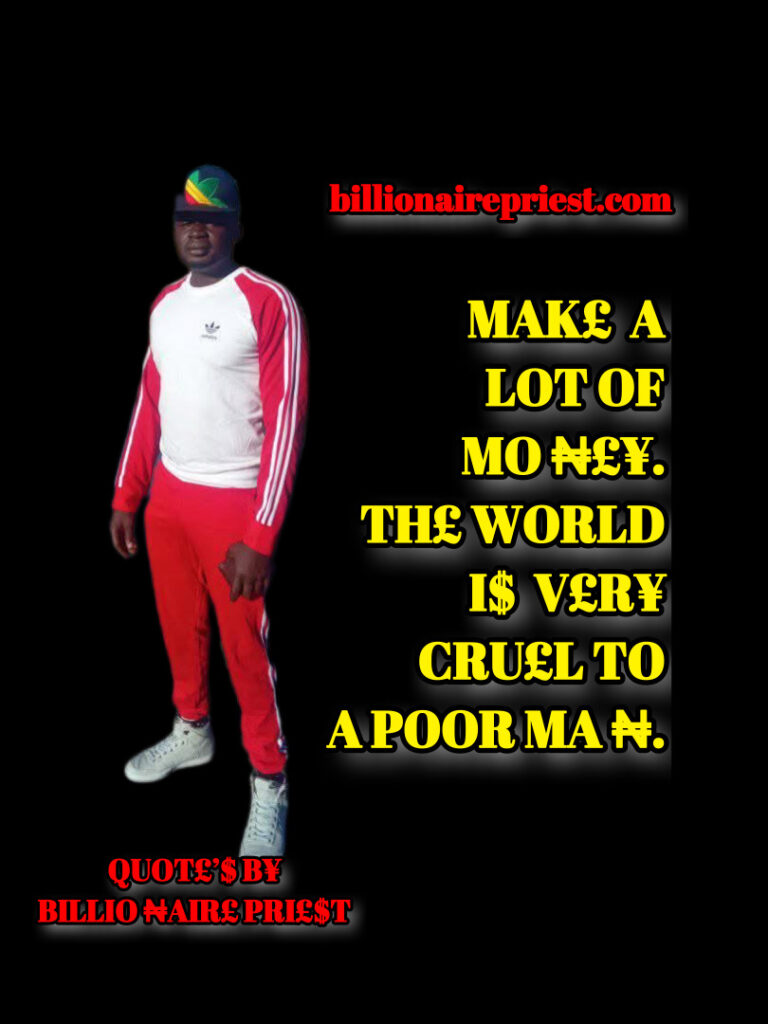
The phrase “Make a lot of money. The world is cruel to a poor man” is a blunt but realistic observation about how economic status affects how you’re treated in society. It’s not saying money equals happiness—but it is acknowledging that lack of money often leads to a lack of options, respect, and security.
1. Poverty Limits Freedom
- When you’re poor, your choices shrink: where you live, what you eat, how you get healthcare, or even how much time you have.
- You’re often stuck reacting to life instead of shaping it.
- Wealth opens doors: it buys time, options, safety, and a buffer against chaos.
“When you’re broke, even being wise isn’t enough.”
2. Society Respects Success
- Fair or not, the world tends to value people who have wealth—assuming they are smart, competent, or worth listening to.
- A poor man may be ignored or dismissed, no matter how intelligent or moral he is.
- Money commands attention and respect, especially in professional and social circles.
3. Money Is a Shield
- Life is unpredictable: illness, accidents, legal issues, emergencies.
- If you’re poor, these things can destroy you.
- With money, you can recover, protect yourself, and plan ahead. It’s not just about luxury—it’s about stability and control.
4. Poverty Often Invites Exploitation
- The poor are more likely to be underpaid, overworked, or mistreated, simply because they have fewer options.
- People and systems take advantage of desperation.
- Money gives you the power to say “no”—to toxic jobs, bad relationships, or unfair treatment.
Important Note:
This isn’t about worshipping money or looking down on the poor. It’s about recognizing that money is leverage in a world that doesn’t always play fair. You don’t have to be a billionaire—but being financially strong makes your life more dignified, protected, and free.
In essence:
Make money not to impress others, but because the world often shows harshness to the powerless—and money gives you power, freedom, and room to breathe.