
 LUPER
LUPER
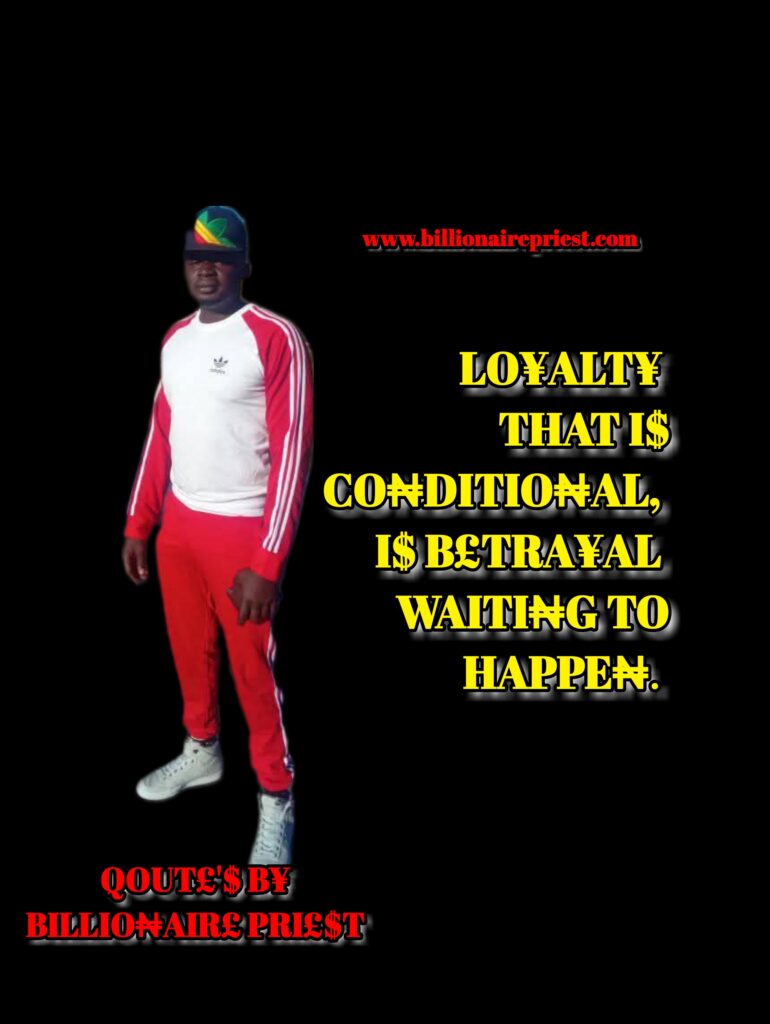
The phrase “Loyalty that is conditional is betrayal waiting to happen” is a powerful statement about the nature of true loyalty—and what it means when that loyalty is tied to circumstances or personal benefit.
🧨 1. Conditional loyalty = transactional loyalty
- When someone’s loyalty depends on you giving them something (status, money, success, validation), it’s not loyalty—it’s a deal.
- As soon as the conditions change or they stop getting what they want, they’re likely to turn on you, leave, or switch sides.
- That’s why it’s “betrayal waiting to happen.” The loyalty was never to you—it was to the benefits of being with you.
⚖️ 2. True loyalty is tested in hard times
- Real loyalty sticks around even when things go wrong—when you fail, struggle, or can’t offer anything.
- Conditional loyalty disappears the moment it becomes inconvenient.
- That’s why it’s dangerous to surround yourself with people who only support you when you’re winning.
🕵️♂️ 3. It often hides in plain sight
- Conditional loyalty can look like real loyalty when everything’s going well.
- But you only see its true nature during conflict, loss, or difficulty.
- That’s when the “loyal” either stand beside you—or walk away (or worse, turn against you).
🚩 4. In relationships, teams, and leadership
- In personal relationships: Someone who’s only “there for you” when you’re fun, successful, or generous may leave when you’re not.
- In leadership: A team that’s only loyal when you’re in power or when things are easy will likely abandon you in crisis.
- In politics, business, or war: Allies who are loyal only when it’s convenient are likely to betray you when the tides turn.
✅ In Summary:
Conditional loyalty is not real loyalty.
It’s a fragile alliance, built on convenience—not character.
And when the conditions break, so does the loyalty.
Real loyalty doesn’t need perfect circumstances—it needs trust, respect, and shared values.
Please follow and like us: