 LUPER
LUPER
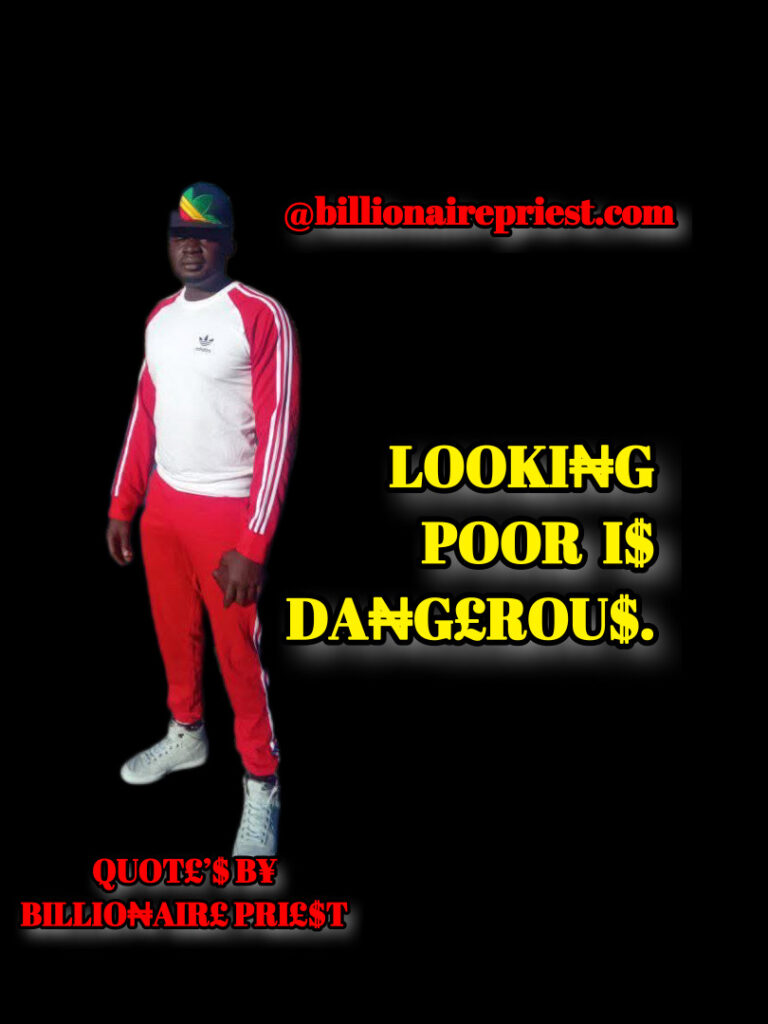
The phrase “Looking poor is dangerous” is a stark observation about how appearances influence perception, treatment, and even safety — especially in a world that often judges people by how they look before knowing who they are.
Let’s break down what this really means:
🔍 1. People Judge by Appearances — Quickly and Often Harshly
- Society tends to associate poverty with weakness, incompetence, or even criminality.
- If someone looks poor (unkempt, worn-out clothing, low-status appearance), they may be:
- Overlooked in professional or social settings.
- Discriminated against or mistreated by authorities, employers, or strangers.
- Assumed to be lesser, lazy, or even dangerous — especially in high-status or high-security environments.
Looking poor can make others treat you as if you are less deserving of respect or rights.
🚔 2. It Can Be a Safety Risk
In many environments, looking poor can literally be dangerous to your well-being:
- In urban areas, people who look poor or homeless are often harassed, targeted by police, or denied services.
- In wealthy or privileged areas, they may be followed, questioned, or treated as suspicious — simply for not “fitting in.”
- They may also be more vulnerable to exploitation or violence, especially if others assume they have no power, protection, or influence.
🧠 3. Perception Shapes Opportunity
Even in everyday situations:
- Job interviews: A poor appearance, no matter how qualified you are, can disqualify you before you speak.
- Social dynamics: You may be excluded from certain groups, events, or networks if you don’t look like you belong.
- Authority figures (teachers, landlords, police, employers) may treat you with less seriousness or fairness.
This isn’t about wealth, but about the signal your appearance sends — fairly or unfairly.
🧥 4. It’s Not About Vanity — It’s About Protection
“Looking poor is dangerous” doesn’t mean you should be obsessed with designer clothes or appearances. Rather, it’s about self-awareness and presentation as armor:
- Dressing cleanly, standing tall, and looking intentional can shield you from assumptions and mistreatment.
- Even in hardship, maintaining dignity in appearance can be a form of quiet resistance against being written off or marginalized.
⚠️ 5. It Highlights a Harsh Social Reality
This phrase is not an endorsement of superficial values — it’s a critique of them.
It forces us to recognize:
- How deeply biased our societies are.
- How dangerous it can be to be visibly poor in an unjust system.
- And how survival sometimes demands conforming to appearances, even when it shouldn’t.
✅ In Summary:
“Looking poor is dangerous” means that in many environments, how you appear can affect your safety, dignity, and access to opportunity — because people judge harshly and systems are often built on perception, not fairness.
It’s not a moral truth, but a social warning.