 LUPER
LUPER
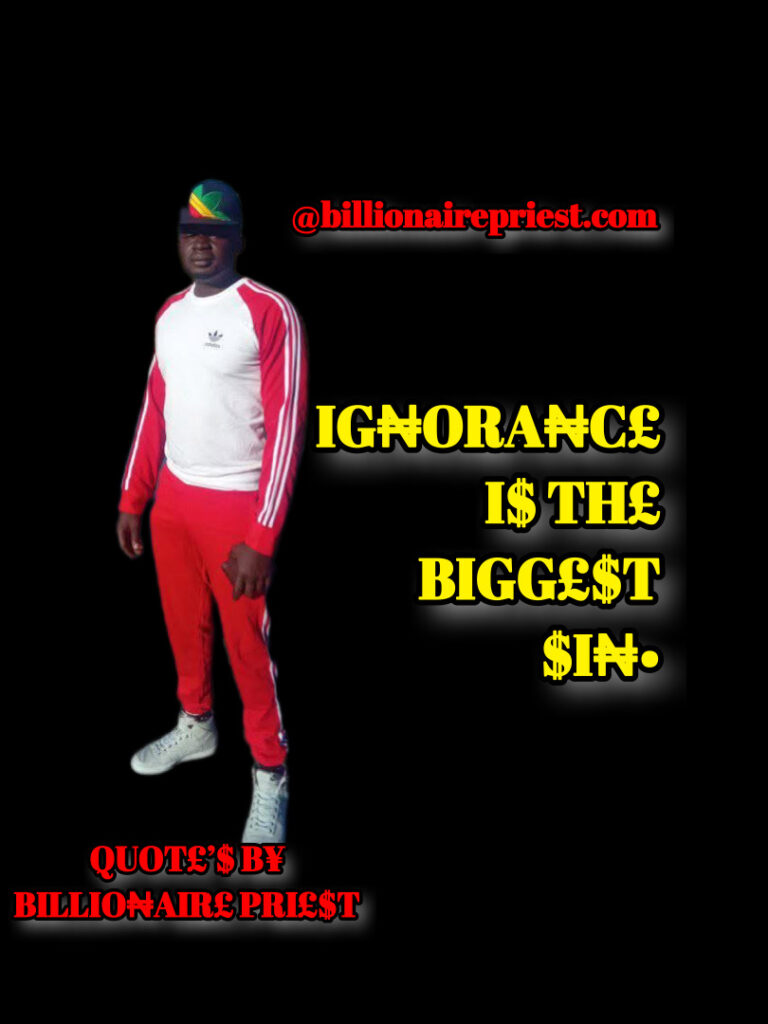
The phrase “Ignorance is the biggest sin” uses moral language to highlight how dangerous not knowing—or refusing to know—can be.
Here’s the deeper meaning:
1. Ignorance leads to harmful actions
People often hurt others not out of cruelty, but out of ignorance:
- ignorance of consequences
- ignorance of others’ feelings
- ignorance of facts, history, or truth
When you don’t understand, you’re more likely to cause harm—intentionally or not.
2. Ignorance prevents growth
Knowledge allows people to improve, fix mistakes, and evolve.
Ignorance keeps you stuck, repeating the same errors and blocking your own progress.
In this sense, ignorance becomes a “sin” against yourself.
3. Ignorance can be chosen
Not all ignorance is innocent.
Sometimes people avoid learning because truth demands responsibility or change.
This willed ignorance—closing your eyes on purpose—is considered especially serious.
4. Ignorance breeds prejudice and division
Hatred, discrimination, and unfair judgments often come from not understanding others:
- their experiences
- their cultures
- their humanity
Ignorance creates fear; knowledge dissolves it.
5. Ignorance blocks moral responsibility
To act ethically, you must understand the situation.
If you don’t know what’s right or wrong, or don’t care to know, you cannot act responsibly.
Thus, ignorance becomes the root of many other wrongs.
In essence
Calling ignorance “the biggest sin” means:
Most wrongdoing begins with not knowing—and especially not wanting to know.
Knowledge lifts; ignorance harms.
It reminds us that learning, awareness, and understanding are moral responsibilities.