 LUPER
LUPER
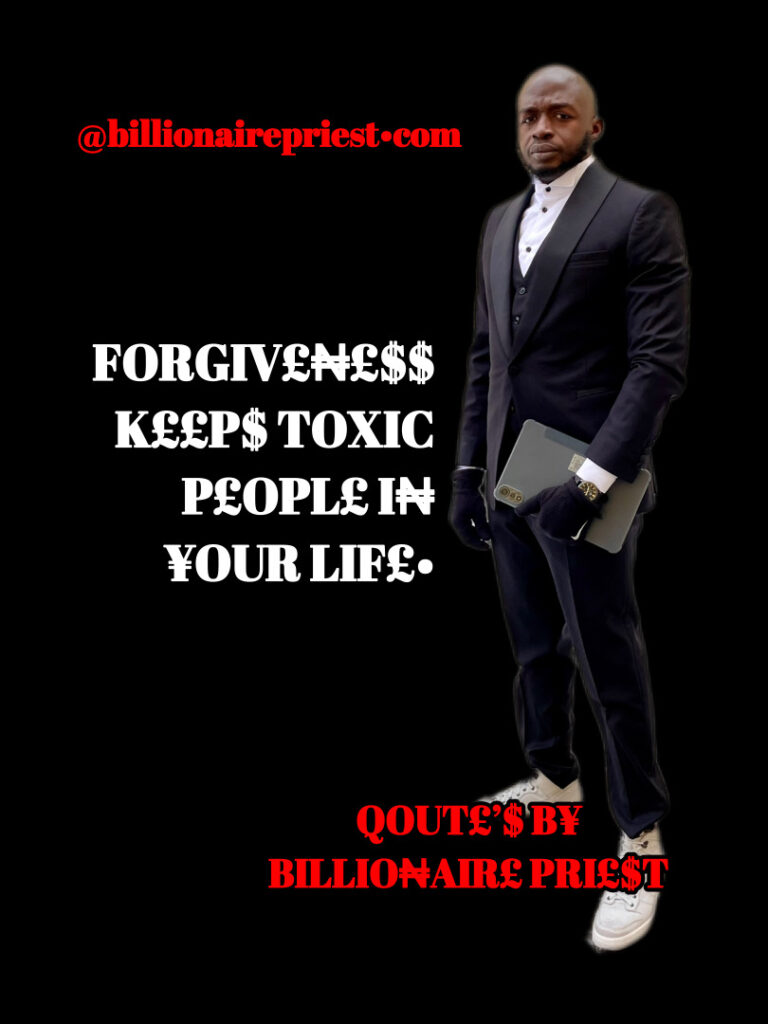
“Forgiveness keeps toxic people in your life” sounds harsh — but it reflects a very real psychological pattern.
To understand it deeply, we have to separate forgiveness, reconciliation, and access. Most people confuse these.
1. Forgiveness Is Internal
Forgiveness is an internal release of resentment.
It means:
- “I refuse to carry this anger.”
- “I will not let this pain control my future.”
- “I accept that it happened.”
It does not automatically mean:
- I trust you again.
- I allow you access to me.
- I resume the relationship.
- I pretend nothing happened.
But here’s where things go wrong.
Many people use forgiveness as a shortcut to avoid confrontation, boundaries, or loss.
2. The Dangerous Version of Forgiveness
Forgiveness becomes harmful when it turns into:
1) Minimization
“It wasn’t that bad.”
“They didn’t mean it.”
“Everyone makes mistakes.”
2) Repetition Tolerance
You forgive.
They repeat.
You forgive again.
They repeat again.
Now forgiveness becomes permission.
3) Trauma Bonding
In toxic dynamics:
- Hurt → Apology → Relief → Hope → Hurt again
The relief after apology feels like love.
This cycle is common in emotionally manipulative relationships and was studied extensively by psychologists like Lenore E. Walker, who described the cycle of abuse (tension → incident → reconciliation → calm).
When forgiveness happens inside this cycle without change, it reinforces the loop.
3. Why Forgiveness Can Keep Toxic People Around
A. It Reduces Consequences
If someone:
- Lies
- Disrespects
- Manipulates
- Violates boundaries
And every time they do it, you forgive and stay…
You remove consequences.
Behavior that has no consequence continues.
Humans learn through reinforcement.
If access to you remains constant, there is no incentive to change.
B. It Confuses Compassion With Tolerance
Healthy compassion:
“I understand your pain.”
Unhealthy tolerance:
“I accept your mistreatment.”
You can understand someone’s trauma and still decide:
“You are not safe for me.”
C. It Feeds the Savior Complex
Some people stay because:
- “They need me.”
- “I can fix them.”
- “They’ll change if I love them enough.”
This belief system was explored in attachment theory by researchers like John Bowlby.
If you have anxious attachment patterns, forgiveness can become a strategy to prevent abandonment.
You forgive to keep connection — even if the connection hurts you.
4. Forgiveness vs Boundaries
Here is the critical distinction:
Forgiveness = releasing resentment.
Boundaries = regulating access.
You can forgive someone and still:
- Block them.
- Leave the relationship.
- Refuse further contact.
- End business partnerships.
- Limit emotional access.
Forgiveness without boundaries = self-betrayal.
Forgiveness with boundaries = emotional maturity.
5. When Forgiveness Becomes Self-Abandonment
If you repeatedly:
- Ignore red flags
- Silence your intuition
- Accept patterns instead of change
- Feel drained, anxious, or small around someone
You are not practicing forgiveness.
You are abandoning yourself to avoid discomfort.
The deeper fear is often:
- Being alone
- Being “too harsh”
- Feeling guilty
- Being perceived as unforgiving
So you forgive — not for peace — but for emotional safety.
6. True Forgiveness Requires Evidence of Change
Healthy reconciliation requires:
- Acknowledgment of harm
- No defensiveness
- Changed behavior
- Consistency over time
- Rebuilt trust slowly
Without behavioral change, forgiveness is premature.
Words are emotional relief.
Change is behavioral proof.
7. The Balanced Truth
Forgiveness does not inherently keep toxic people in your life.
Lack of boundaries does.
You can say:
“I forgive you. I don’t hate you. But you no longer have access to me.”
That is strength.
Leaders like Mahatma Gandhi embodied forgiveness as a moral principle — but forgiveness did not mean surrendering to injustice. It coexisted with firm resistance.
Forgiveness without resistance enables harm.
Forgiveness with boundaries protects dignity.
8. The Deep Insight
The real question isn’t:
“Should I forgive?”
It’s:
“Has this person demonstrated the capacity to be safe?”
Forgiveness is about your peace.
Access is about your protection.
You can have peace and still close the door.