 LUPER
LUPER
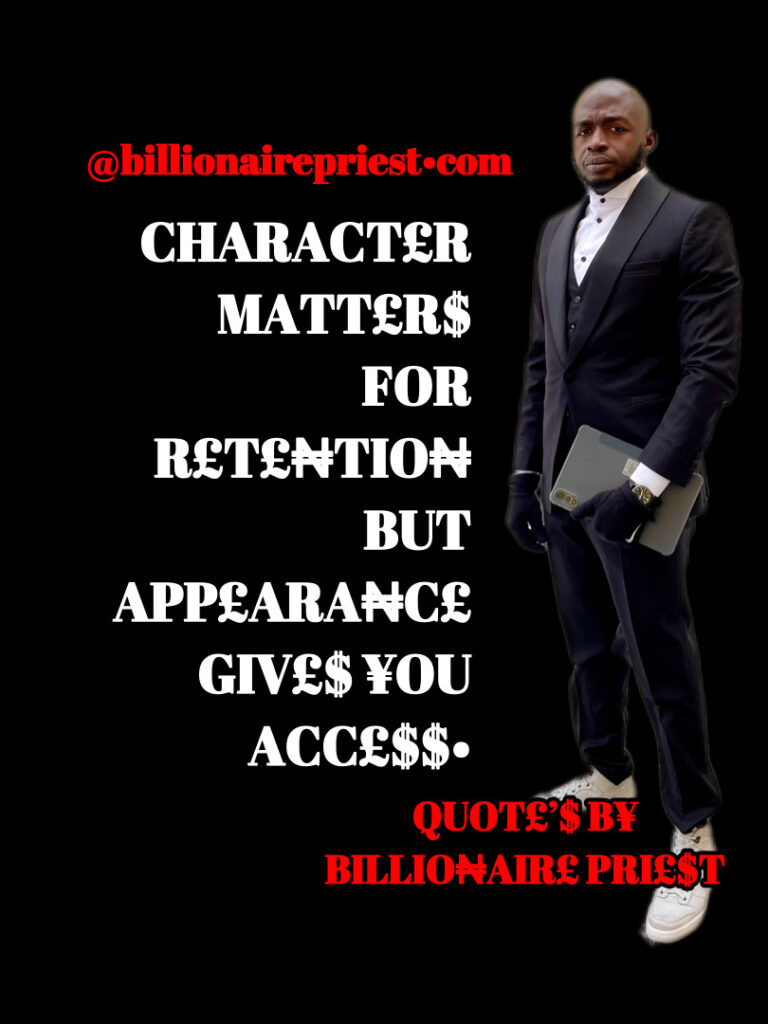
The statement “Character matters for retention, but appearance gives you access” is a deep observation about human perception, social systems, and influence. It distinguishes between first impressions and long-term trust, highlighting how different qualities operate at different stages of opportunity.
Let’s explore it deeply.
1. Access vs. Retention: Two Different Gates
The quote splits life into two phases:
- Access: Getting noticed, getting in the door, attracting opportunity.
- Retention: Staying relevant, trusted, or valued once inside.
- Appearance – including style, body language, presentation, and confidence – functions as a signal to open doors.
- Character – including integrity, reliability, competence, and values – functions as the glue that keeps you inside once initial attention is granted.
One draws interest; the other sustains relationships.
2. Appearance as a Signal of Potential
Appearance is not just about aesthetics. It is a complex signal system that communicates:
- Confidence
- Status
- Alignment with social norms
- Competence cues
Psychologists Amy Cuddy and others have studied “power posing” and nonverbal communication, showing that presence and posture affect how others perceive authority.
In social or professional systems, people often judge you in seconds. That judgment determines access.
Key point: Appearance tells others, consciously or unconsciously, whether engaging with you is “safe, worthwhile, or prestigious.”
3. Character as the Sustaining Force
Once access is granted, appearance loses its power to maintain influence. What matters is:
- Honesty
- Competence
- Reliability
- Emotional intelligence
- Generosity of spirit
Without character, opportunities vanish because others detect inconsistencies between image and substance.
Example: A charismatic leader may initially inspire a team, but without integrity or strategic competence, the team quickly loses faith.
Character is the structural foundation of long-term success. Appearance is the entry key, but character is the lock that holds the door open.
4. Systems Are Dual-Layered
Most social systems operate in two layers:
- Signal Layer (Surface): Quick judgments, visibility, and first impressions.
- Substance Layer (Depth): Long-term trust, consistency, and relational durability.
Appearance operates in the signal layer. Character operates in the substance layer.
Neglect either, and the system responds accordingly:
- Overemphasis on appearance → fleeting influence, suspicion, or opportunism.
- Overemphasis on character without visibility → overlooked talent, delayed access, or underappreciation.
5. Evolutionary Perspective
From a survival standpoint:
- Humans evolved to assess strangers quickly. Visual cues (health, confidence, status signals) influenced whether approaching someone was safe or advantageous.
- Long-term relationships depended on trustworthiness and reliability.
Thus, appearance as access and character as retention is built into our social cognition.
6. Practical Implications
- For Career Growth:
- Appearance (presentation, confidence, networking) opens doors.
- Character (skill, ethics, dependability) keeps promotions and reputation intact.
- For Relationships:
- First impressions attract attention or affection.
- Emotional depth, empathy, and reliability sustain bonds.
- For Leadership & Influence:
- Charisma draws followers.
- Vision, integrity, and competence retain loyalty.
7. The Subtle Interplay
It is not a strict hierarchy. Appearance can amplify character, and character can enhance perception of appearance.
- A person with poor character but impeccable style may gain temporary access but not retention.
- A person with deep character but no awareness of presentation may struggle to get initial attention.
Optimal influence requires both layers in balance: signal plus substance.
8. Strategic Perspective
Think of access as entry cost and retention as compound interest:
- You cannot invest in growth without entering the system (appearance).
- Once in, only character compounds influence, respect, and legacy.
Leaders, entrepreneurs, and influencers often succeed by consciously managing both:
- Appearance opens doors strategically.
- Character ensures doors remain open and leads to multiplication of opportunity.
9. Philosophical Depth
At a deeper level, this principle also touches on human nature:
- Humans are drawn to the visible — the shiny, confident, or impressive.
- Humans commit to what is consistent, reliable, and trustworthy.
Thus, the world rewards both perception and substance, but in different temporal layers.
10. Core Insight
“Appearance gives you access; character gives you retention” is essentially a map for strategic life navigation:
- Don’t underestimate first impressions — they unlock opportunity.
- Don’t neglect character — it sustains influence, relationships, and legacy.
- True success arises from aligning what is visible with what is real.
In short:
Open doors with presence. Stay inside with integrity.