
 LUPER
LUPER
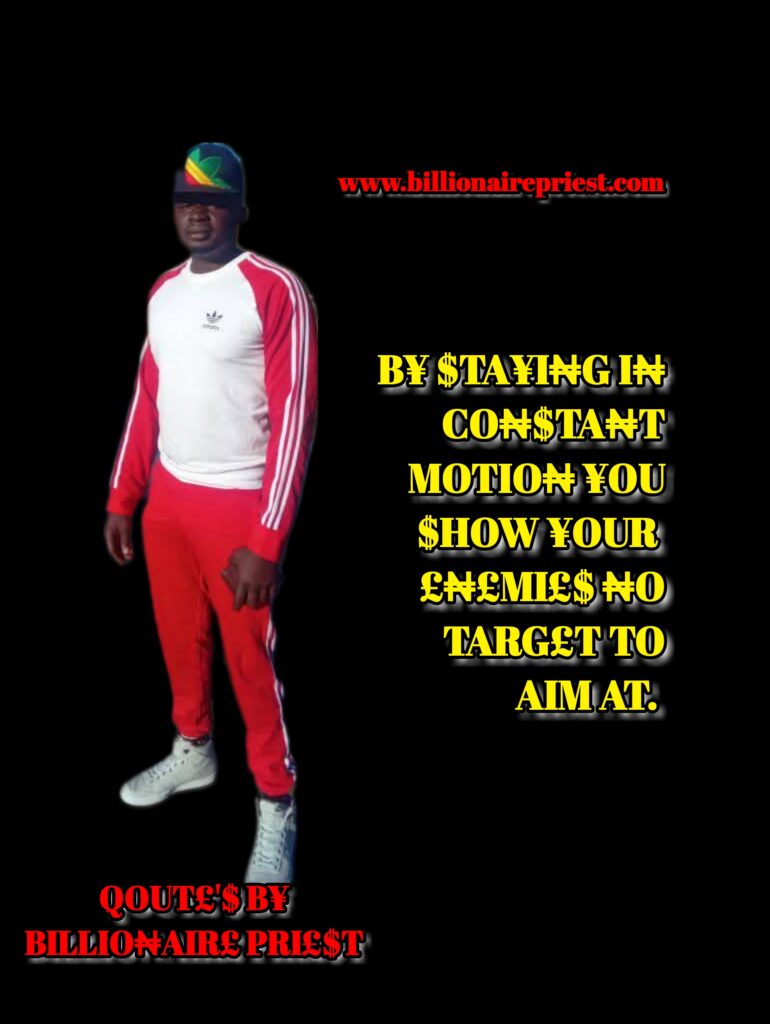
The statement “By staying in constant motion, you show your enemies no target to aim at” is a metaphor that emphasizes the power of unpredictability, adaptability, and momentum—especially in the face of opposition or threats.
Here’s a breakdown of its meaning:
1. Constant Motion = Unpredictability
- When you keep moving—physically, mentally, or strategically—others can’t easily anticipate your next step.
- This applies to everything from warfare and politics to personal growth and business.
- Like a moving target, you’re harder to “hit” because you’re not standing still long enough to be pinned down or attacked.
2. Avoiding Vulnerability
- Standing still often means becoming predictable, stagnant, or complacent.
- Enemies (or critics, competitors, manipulators) can exploit predictable behavior.
- But if you’re always evolving or shifting your approach, you give them nothing solid to latch onto.
3. Adaptability as a Defense
- Movement here also symbolizes adaptation and resilience.
- When life throws obstacles at you, staying in motion means you don’t freeze—you adjust, pivot, and keep going.
- It becomes harder for anyone to hold you back or trap you in a fixed identity or role.
4. Strategic Disruption
- In conflict or competition, staying in motion forces others to stay reactive instead of proactive.
- You’re setting the pace—they’re chasing.
- This can be a powerful psychological advantage: they never know what you’re planning, where you’re headed, or how to stop you.
5. Real-World Examples
- In business: Companies that constantly innovate are hard for competitors to catch.
- In life: A person who keeps growing, learning, and shifting goals is harder to judge, control, or take down.
- In war or sports: Tactical movement keeps opponents guessing, while stillness is vulnerability.
In Summary
Staying in motion means staying ahead—mentally, emotionally, or strategically.
When you refuse to be predictable or static, you deny your enemies the stability they need to strike.
Movement is not just momentum—it’s protection.
Please follow and like us: