
 LUPER
LUPER
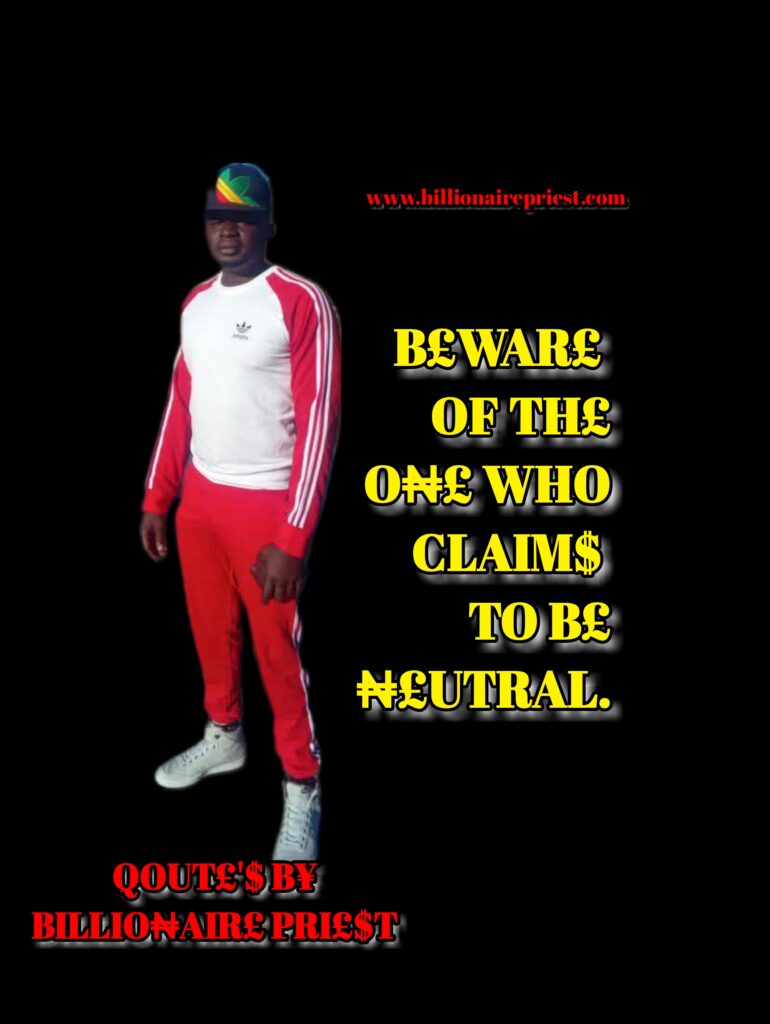
The phrase “Beware of the one who claims to be neutral” is a cautionary statement about people who refuse to take sides—especially in situations of conflict, injustice, or moral tension.
Here’s what it really means:
1. Neutrality Can Be a Mask
- Someone who claims to be neutral may appear fair or unbiased, but neutrality can sometimes be a disguise for passivity, fear, or hidden allegiance.
- They might not want to reveal their true stance, so they hide behind “neutrality” to avoid responsibility or consequences.
2. Injustice Thrives on Silence
- In situations where harm is being done—abuse, oppression, betrayal—choosing to be neutral helps the aggressor, not the victim.
- As the saying goes:“If you are neutral in situations of injustice, you have chosen the side of the oppressor.” – Desmond Tutu
3. Neutrality Can Be Manipulative
- Some people claim neutrality to maintain power, control, or image, especially in politics, leadership, or relationships.
- They may appear above the conflict, but in reality, they’re avoiding accountability or keeping their hands clean while benefiting from both sides.
4. True Integrity Requires Taking a Stand
- There are moments in life when not choosing a side is, in itself, a choice—often a morally weak or self-serving one.
- A person of strong character will take a position, even when it’s uncomfortable or risky.
5. Neutral People Can Be Dangerous
- You can’t rely on someone who won’t stand for anything when it matters.
- In a crisis, the neutral person may abandon you or allow harm to happen just to protect their own peace.
In Summary
Someone who always claims to be “neutral” may not be your ally—they may be protecting themselves, not the truth.
Neutrality in the face of right and wrong is not wisdom—it’s avoidance.
And avoidance, in the wrong moment, can be just as dangerous as open opposition.
Please follow and like us: