 LUPER
LUPER
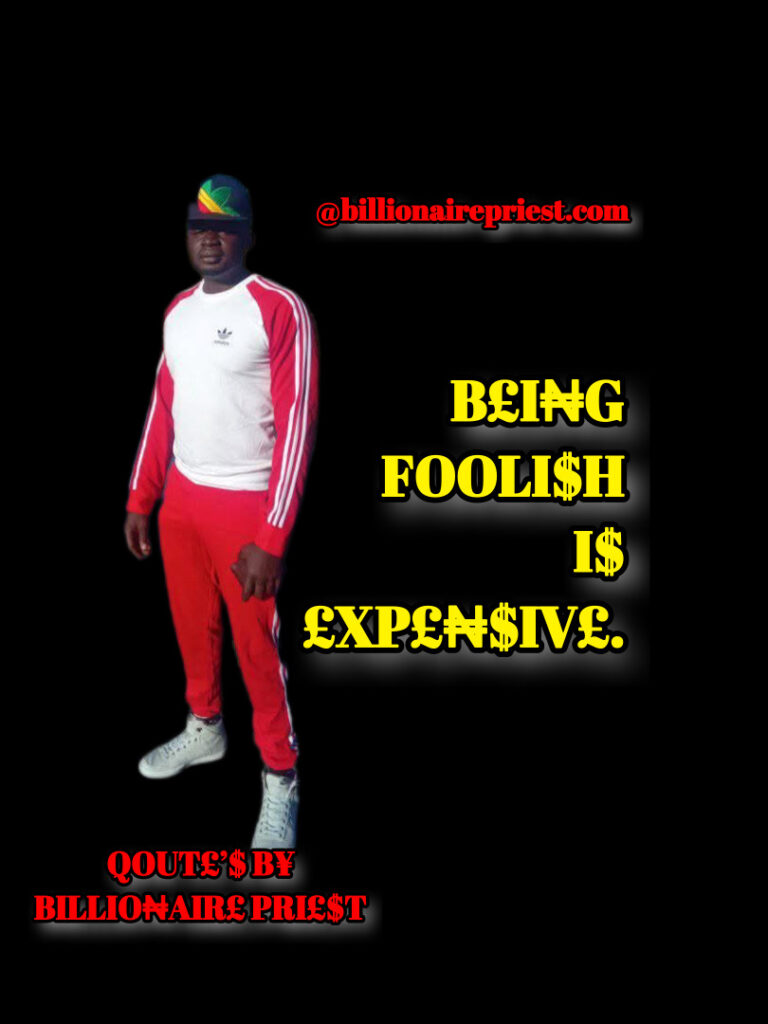
The phrase “Being foolish is expensive” means that making unwise decisions—especially repeatedly—often comes with serious costs, whether in terms of money, time, reputation, relationships, or missed opportunities.
Let’s break it down:
🔹 What does “foolish” mean?
Being foolish refers to:
- Acting without thinking things through,
- Ignoring advice or warnings,
- Making impulsive or emotional decisions,
- Repeating mistakes without learning from them.
🔹 What does “expensive” mean here?
Not just financial—it means any kind of high cost or painful consequence, like:
- Wasted time you can’t get back,
- Damaged trust in relationships,
- Legal trouble,
- Career setbacks,
- Regret or suffering that could’ve been avoided.
🧠 In essence:
Foolishness is costly—because reality always sends a bill.
Whether you’re reckless with money, trust the wrong people, ignore red flags, or act without understanding, the consequences eventually catch up, and they often come with a heavy price.
🔍 Examples:
- Financial: Gambling recklessly or falling for scams.
- Personal: Staying in toxic relationships out of pride or denial.
- Professional: Ignoring feedback or refusing to adapt, leading to lost jobs or opportunities.
- Social: Acting out of ego or arrogance and damaging your reputation.
💡 Key Takeaway:
Being wise doesn’t mean you never make mistakes—but it means you learn from them. Foolishness becomes expensive when it’s chronic, careless, or pride-driven.
Please follow and like us: