 LUPER
LUPER
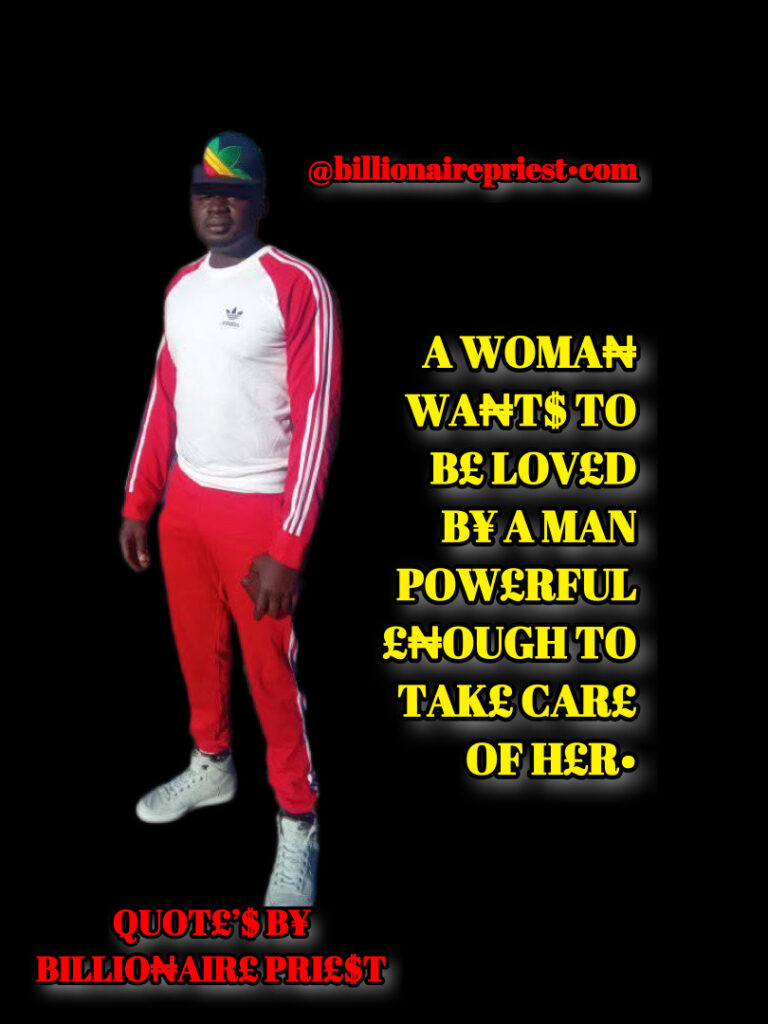
The idea “a woman wants to be loved by a man powerful enough to take care of her” touches psychology, biology, culture, and personal values. To explain it deeply, we need to unpack what “power,” “care,” and “love” actually mean—because they’re often misunderstood.
1. What “power” really means (and what it doesn’t)
In this context, power is rarely about domination or control.
Most of the time, it refers to:
- Emotional stability (not reactive, not fragile)
- Competence (able to handle life’s problems)
- Reliability (shows up consistently)
- Confidence (secure, not arrogant)
- Protectiveness (creates safety, not fear)
This kind of power is about capacity, not authority.
A man who is emotionally grounded and capable signals:
“You are safe with me. I can handle myself, and I can support others.”
That sense of safety is deeply attractive to many people—not just women.
2. The psychological foundation: safety before romance
Psychologically, humans seek security before connection.
For many women, being “taken care of” means:
- Not being emotionally abandoned
- Not having to carry everything alone
- Knowing someone can handle pressure and responsibility
This doesn’t mean weakness. It means interdependence, not dependence.
A woman can be strong and still want a partner who:
- doesn’t collapse under stress
- doesn’t need rescuing
- doesn’t rely on her to be his emotional regulator
3. Evolutionary roots (without exaggeration)
From an evolutionary perspective (very broadly speaking):
- Choosing a capable partner increased survival
- Stability mattered more than charm
- Predictability mattered more than intensity
These instincts don’t disappear just because society changes.
They get translated into modern traits like:
- ambition
- discipline
- emotional control
- responsibility
It’s not about money alone—it’s about competence over chaos.
4. Cultural influence and expectations
Culture amplifies this idea in different ways:
- Stories often frame love as protection + devotion
- Media equates strength with worthiness
- Many girls are taught (implicitly) to value security in relationships
This can be healthy or harmful depending on how it’s interpreted:
- Healthy: “I want a partner who adds stability to my life”
- Harmful: “I need someone else to define my worth or survival”
The difference lies in agency.
5. Love + care ≠ loss of independence
A key misconception is that wanting care means surrendering independence.
In healthy relationships:
- Care flows both ways
- Strength supports strength
- One partner’s power doesn’t erase the other’s autonomy
Many women want a powerful man not to shrink themselves, but to feel free to grow without fear of collapse if things get hard.
6. Why this idea gets criticized
The statement is often challenged because:
- It can sound like promoting inequality
- It ignores women who value different traits
- It can excuse control or imbalance if misunderstood
That’s why it’s important to say clearly:
Wanting safety and strength is not the same as wanting dominance or dependence.
7. The deeper truth
A more accurate and balanced version of the idea is:
Many women want to be loved by someone who is capable, steady, and strong enough to create emotional and practical safety—while still respecting their independence.
At its core, this isn’t about gender.
It’s about a human desire to say:
“I don’t have to face everything alone.”
Final thought
Power without care is dangerous.
Care without strength is unstable.
The attraction lies in the combination—strength used responsibly, in service of love.