 LUPER
LUPER
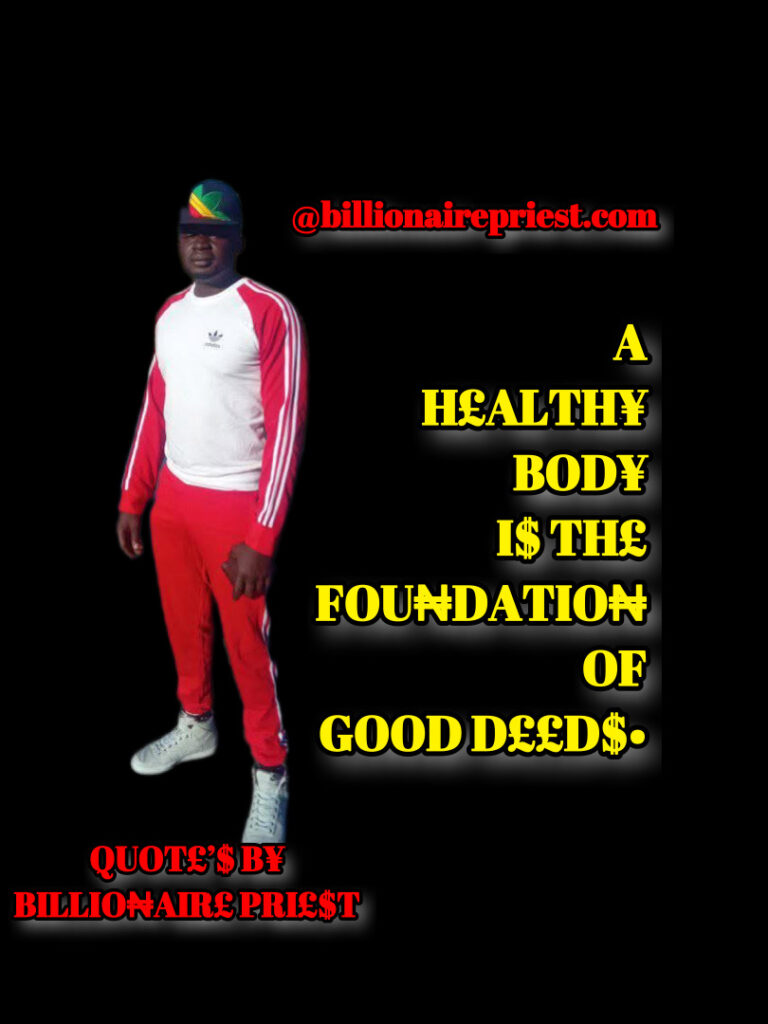
The phrase “A healthy body is the foundation of good deeds” means that your ability to do good in the world—help others, take action, behave responsibly—begins with your physical well-being.
Here’s the deeper idea:
1. You need strength to help others
Good deeds often require energy:
listening, supporting, working, caring, giving.
If your body is weak, exhausted, or unwell, it becomes harder to act generously or consistently.
A healthy body gives you the physical strength to participate in life and contribute to others.
2. Health supports mental clarity and emotional balance
A sound body helps create a calm, focused mind.
With clarity and emotional stability, you can make wiser choices and act more compassionately.
When you feel physically unwell, your mind can become clouded or stressed, reducing your ability to act kindly.
3. Self-care enables other-care
Taking care of your own health isn’t selfish; it’s what equips you to show up for others.
You can give more when you’re not running on empty.
A solid foundation makes the house strong; a healthy body makes your actions strong.
4. Good deeds require consistency
True goodness is not just a single act—it’s a pattern over time.
Sustaining that pattern requires vitality, stamina, and resilience, all of which come from physical health.
5. Physical well-being influences your attitude
When your body feels good, you’re more patient, generous, and compassionate.
Pain, fatigue, or sickness can make even kind people feel irritable or withdrawn.
In essence
A healthy body supports a healthy mind,
and a healthy mind leads to meaningful, consistent good deeds.
Your physical well-being is the base upon which your actions, kindness, and contributions rest.