 LUPER
LUPER
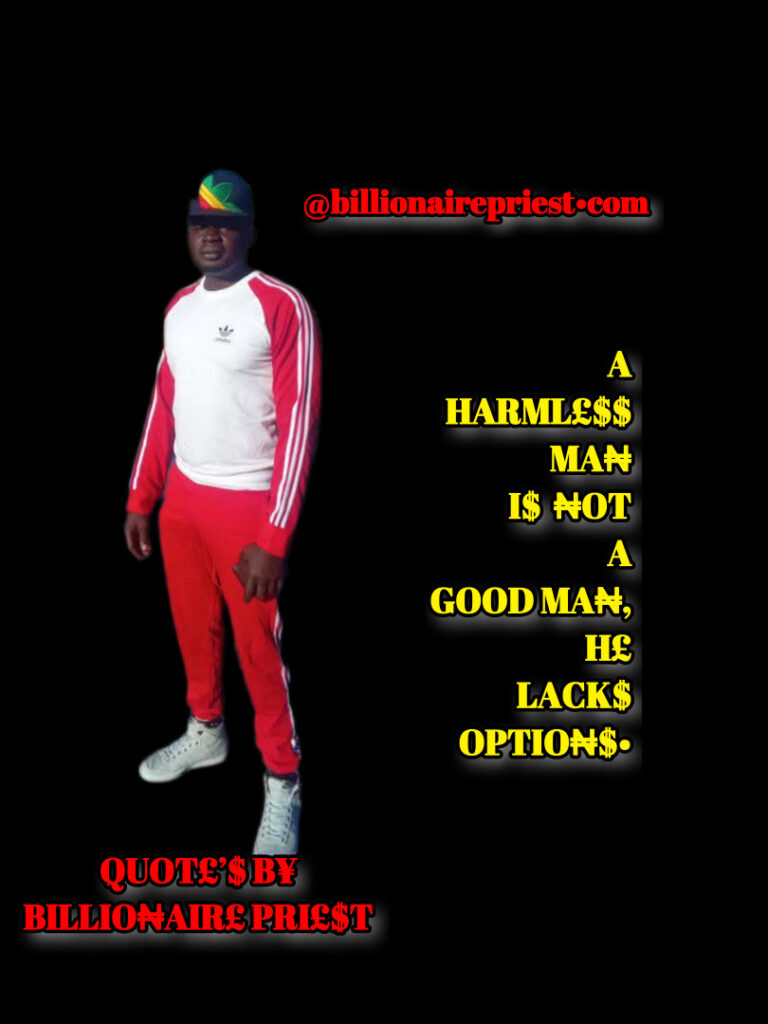
The statement “A harmless man is not a good man; he lacks options” is a compact way of pointing out the difference between true moral choice and mere inability. It argues that goodness only has meaning when it is chosen in the presence of power, not when it is forced by weakness.
Let’s unpack it layer by layer.
1. Harmlessness vs. Goodness
- Harmless means incapable of causing harm.
- Good means capable of harm, but choosing not to use it.
If someone cannot hurt anyone—because they are weak, fearful, constrained, or dependent—then their “peacefulness” isn’t a moral achievement. It’s simply circumstance.
Goodness requires agency.
2. Moral Choice Requires Options
Ethics only exists where choice exists.
- A person who could lie but tells the truth is honest.
- A person who could steal but doesn’t is virtuous.
- A person who could be violent but restrains themselves is disciplined.
If none of those actions are possible, then no moral credit is earned. There is no sacrifice, no restraint, no inner victory—only limitation.
This is what “he lacks options” points to:
Without power, restraint is not a choice; it’s inevitability.
3. Power Gives Meaning to Restraint
Real goodness emerges when someone has:
- Strength
- Intelligence
- Influence
- Physical or social power
…and chooses restraint anyway.
This is why society often respects:
- The strong person who is gentle
- The leader who is merciful
- The person capable of aggression who chooses peace
Their goodness is costly. It involves controlling something dangerous within themselves.
4. The Shadow Side of This Idea
This phrase also warns against confusing weakness with virtue.
If people are taught:
- “You are good because you are harmless”
- “Aggression is always bad”
- “Strength itself is immoral”
They may never develop:
- Confidence
- Boundaries
- The ability to protect themselves or others
Then, when life demands firmness, courage, or confrontation, they have nothing to draw from.
Goodness without strength collapses under pressure.
5. The Ideal: Capable but Controlled
The deeper philosophy isn’t “be dangerous,” but rather:
Be capable of harm, yet governed by conscience.
A truly good person:
- Can say no
- Can defend
- Can confront
- Can walk away from cruelty by choice
This is moral maturity: integrating power with responsibility.
6. Why This Idea Feels Uncomfortable
Many people prefer the idea that goodness is passive, because:
- It’s safer
- It demands less self-development
- It avoids inner conflict
But the uncomfortable truth is that virtue without power is fragile, and fragile goodness often disappears the moment fear or temptation appears.
In essence
A harmless man may be peaceful, but only a capable man who chooses peace is truly good.
Without options, there is no morality—only limitation.